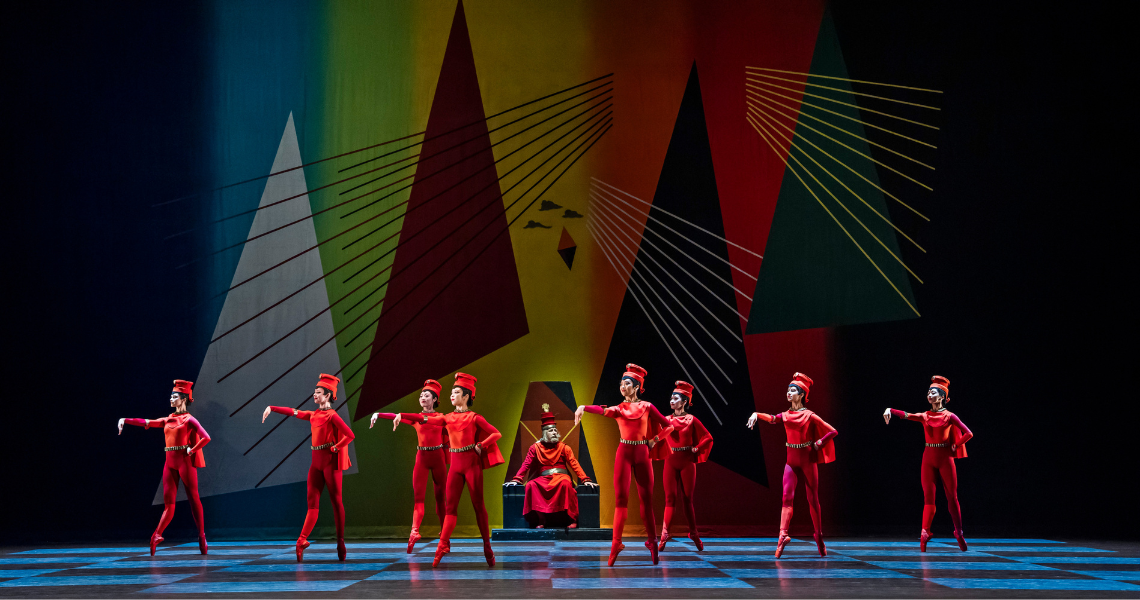
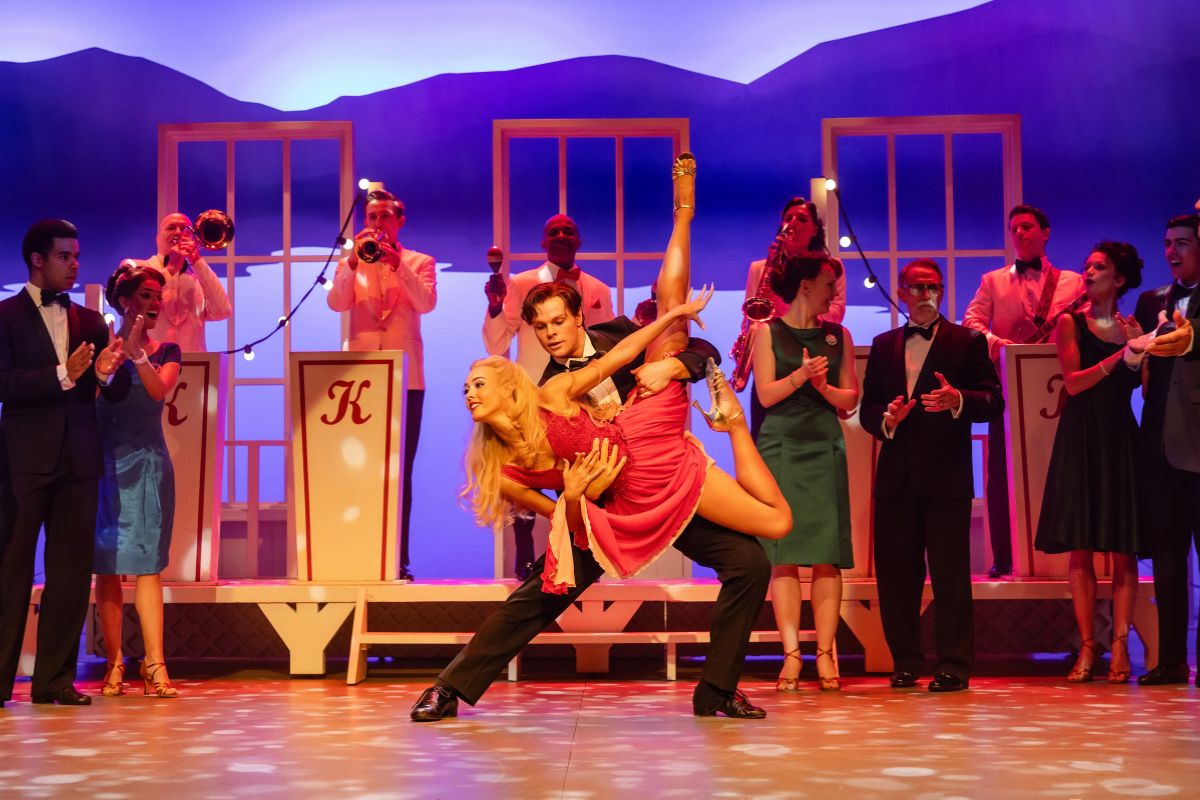
Made in 1987, Dirty Dancing is a coming-of-age film that has remained perpetually young, having grossed over $215 million (against a budget of just $4.5 million) and with a stage show legacy that is still wowing audiences almost 40 years after the film’s premiere.
Charlie Varlet, who plays the lead role of Frances ‘Baby’ Houseman in the current stage show explained to me that the show benefits from a “passing of the torch.” Parents who loved the film are bringing their children to see the stage show and so new generations are discovering Baby’s story in a production that balances nostalgia with fresh theatrical energy. “The show has that rare quality of creating shared experiences between different generations. New audiences can discover the story while long-time fans relive iconic moments.”

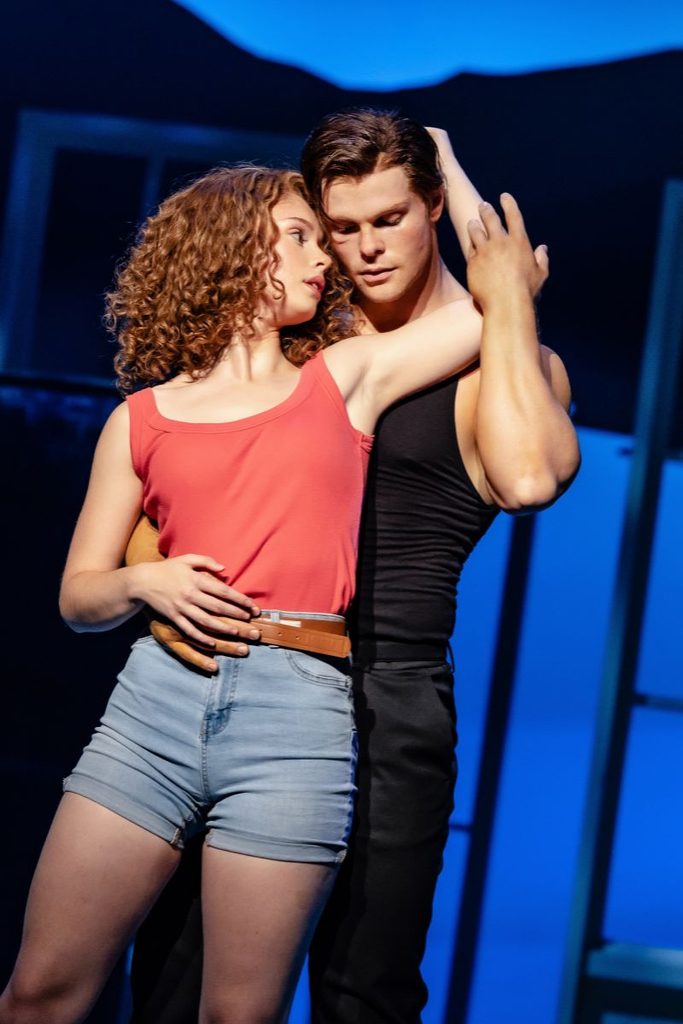
This latest iteration of Dirty Dancing has been choreographed by Austin Wilks who has a long history with the musical, having started as an ensemble performer before being cast in the lead role of Johnny Castle, the uber cool showman role that brought fame to Patrick Swayze. Wilks’ various associations with the show provided unique insight into how it could evolve while remaining faithful to the original.
Having worked on international productions (Dirty Dancing is big everywhere) Wilks was invited to redevelop the show during the pandemic, using all his experience to shape a new production. His goal was to keep faith with the film, especially in terms of retaining the iconic dance moments but also exploring the dance styles of the 1960s to create exciting and technically impressive new choreography. The production features extensive ensemble work in large-scale dance numbers with the finale to “(I’ve Had) The Time of My Life” uniting the show’s different social worlds through dance.
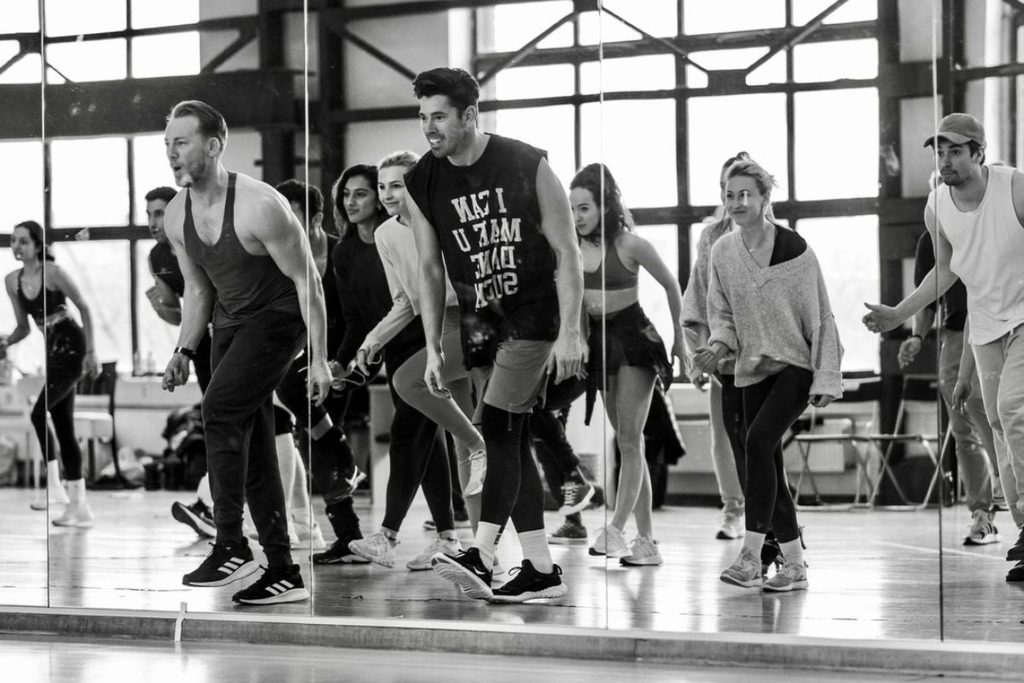
Everyone will remember THE flying lift from the film, which Johnny and Baby (Jennifer Grey) practice in the lake before performing in the finale. Joel Benjamin takes on the role of Johnny in this production, and he explained that the Lake Scene is cleverly reproduced through illusion on the stage using special lighting effects, projections and sound design. Varlet added that “the effect allows audiences to suspend disbelief while preserving one of the film’s most memorable moments.”
The character of Johnny can be seen as a cultural pioneer. “Johnny’s style of movement feels ahead of its time,” noted Benjamin. “His dancing is more grounded, expressive and sensual than the accepted social dancing of the period, which helps explain why the staff’s dance culture exists somewhat separately from the Kellerman resort’s mainstream environment. Johnny is the driving force, introducing new movement styles to those around him.”

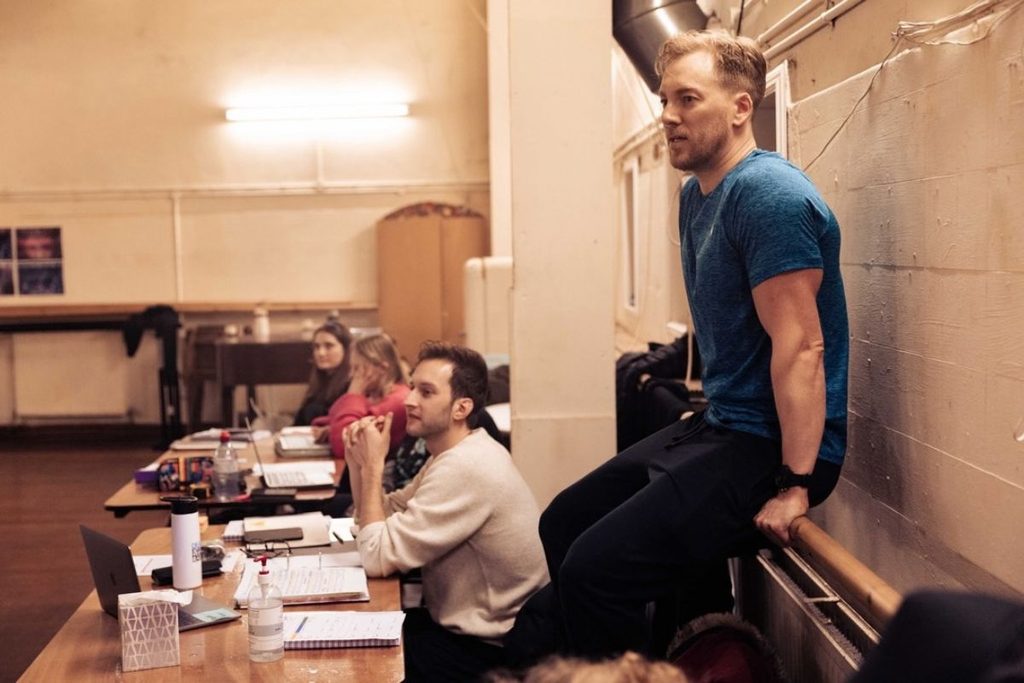
“The show attracts fans of the film who come wanting nostalgia and to hear music they love,” explained Wilks. The original score remains largely unchanged although some songs are included that the writer, Eleanor Bergstein, intended for the film but were unavailable at the time. “The stage production uses energetic musical interpretations, and this hi-energy music supports stronger theatrical dance sequences,” said Wilks. He also described the essential contrast between the formal world of Kellerman’s resort and the hidden freer and more expressive world of “dirty dancing”. The importance of the choreographic journey is to express the storytelling as Baby discovers that underground world and develops her skill as a dancer under Johnny’s tuition.
Ellie Fergusson, a professional ballet dancer, plays Penny, Johnny’s regular dance partner, and she explained: “the emotional intensity of portraying Penny’s experiences is challenging. Her story includes an unexpected pregnancy and an abortion, requiring pain, vulnerability and distress.”
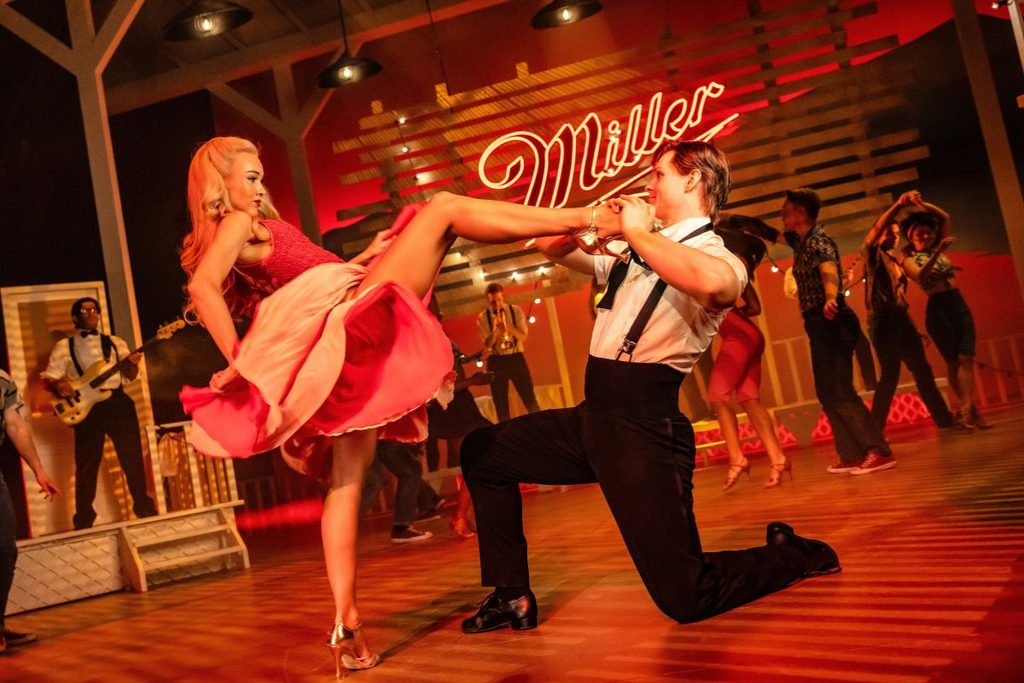
In addition to these dramatic challenges, Penny is one of the show’s most dance-focused roles, with the Mambo as her signature dance number, featuring kicks, turns, fast partnered work and the highlight of a “split-star” lift. “The choreography is highly technical and physically demanding,” said Fergusson who also described the show’s two distinct dance styles with athletic and technically demanding performance numbers designed to impress the audience contrasted with the more intimate and sensual character-driven social dancing, concentrated on relationships and narrative.
The production remains a 1960s story, remembered and filtered through an 80s perspective, but this stage adaptation also explores themes that were only lightly touched on in the film, including civil rights issues, social divisions and the broader political climate of early 1960s America, providing greater historical context, adding depth and realism without changing the story.
Varlet emphasised that Baby’s development as a dancer mirrors her emotional growth. “Baby gradually learns confidence, independence and self-expression as her dancing improves.” This stage interpretation expands upon Baby’s progression as a dancer more fully than in the film, including an extended training montage and expanded rehearsal sequences. “Austin’s’ choreography celebrates movement in ways the film could not fully explore,” added Benjamin.
“There is a strong nostalgia for audiences who grew up with the film,” explained Wilks, adding, “this production places a stronger emphasis on dance, spectacle and audience enjoyment.” As well as that flying lift the other indelible moments are all respected in the stage show, including the memorable line, “Nobody puts Baby in the corner”.
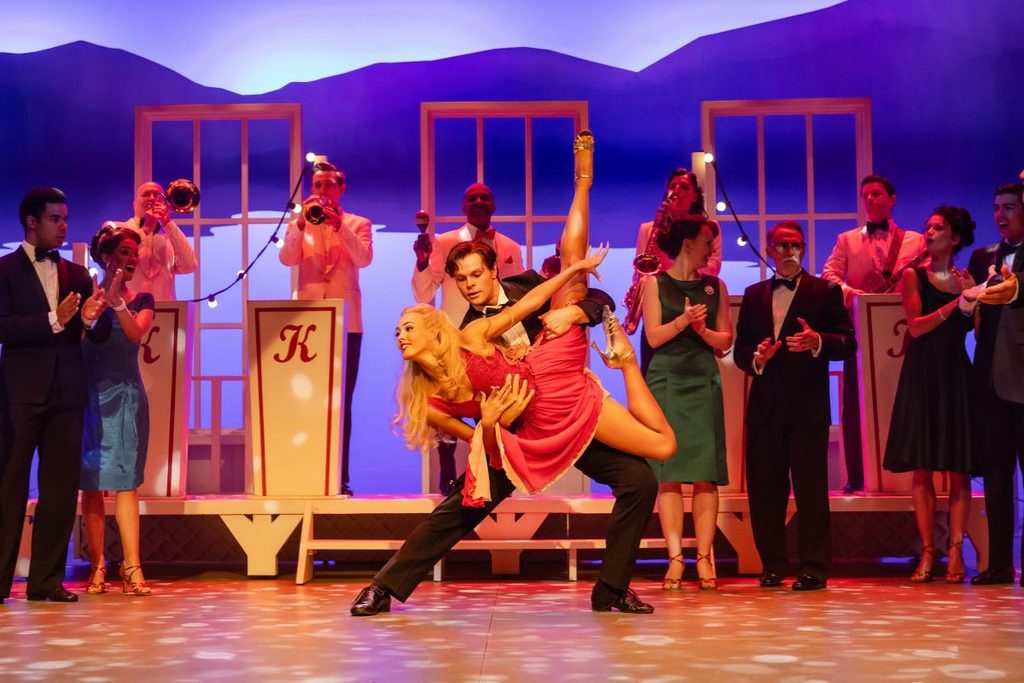
Benjamin described the show as “a love letter to the film.” Varlet concurred: “The production avoids reinventing or modernising the story and if you love the film, you’re going to love the show.” Fergusson believes the production succeeds because “the story is engaging from beginning to end; the pace remains fast and entertaining, and the combination of music, dance and nostalgia creates an uplifting atmosphere.”
The strongest recurring theme in these conversations was the connection between audience and performers. Varlet described the finale as feeling: “Like we’ve all won together. By the end of the performance the cast and audience feel emotionally connected in a feel-good theatrical experience that brings audiences to their feet.”
Dirty Dancing is touring throughout the UK and Republic of Ireland until June 2027. Tickets available here.