Graham Watts OBE, Culture Editor at bThere Magazine, reviews Hay Fever – Noël Coward’s timeless comedy of bad manners at Wyndham’s Theatre, where an eccentric family turns a country-house weekend into farcical chaos, with sublime comic timing from Christine Baranski and a stellar ensemble including Richard E. Grant.
Noël Coward claimed to have scribbled Hay Fever in three days although posthumous research in his notebooks seems to suggest that this was fancifully exaggerated. Inspired by his eventful visit to the New York home of an eccentric actress, Laurette Taylor and her playwright husband, the ironically named Hartley Manners, Hay Fever premiered 101 years ago as a comedy of bad manners, in a genre of rude inhospitality that has subsequently included the classic TV comedy of Fawlty Towers.
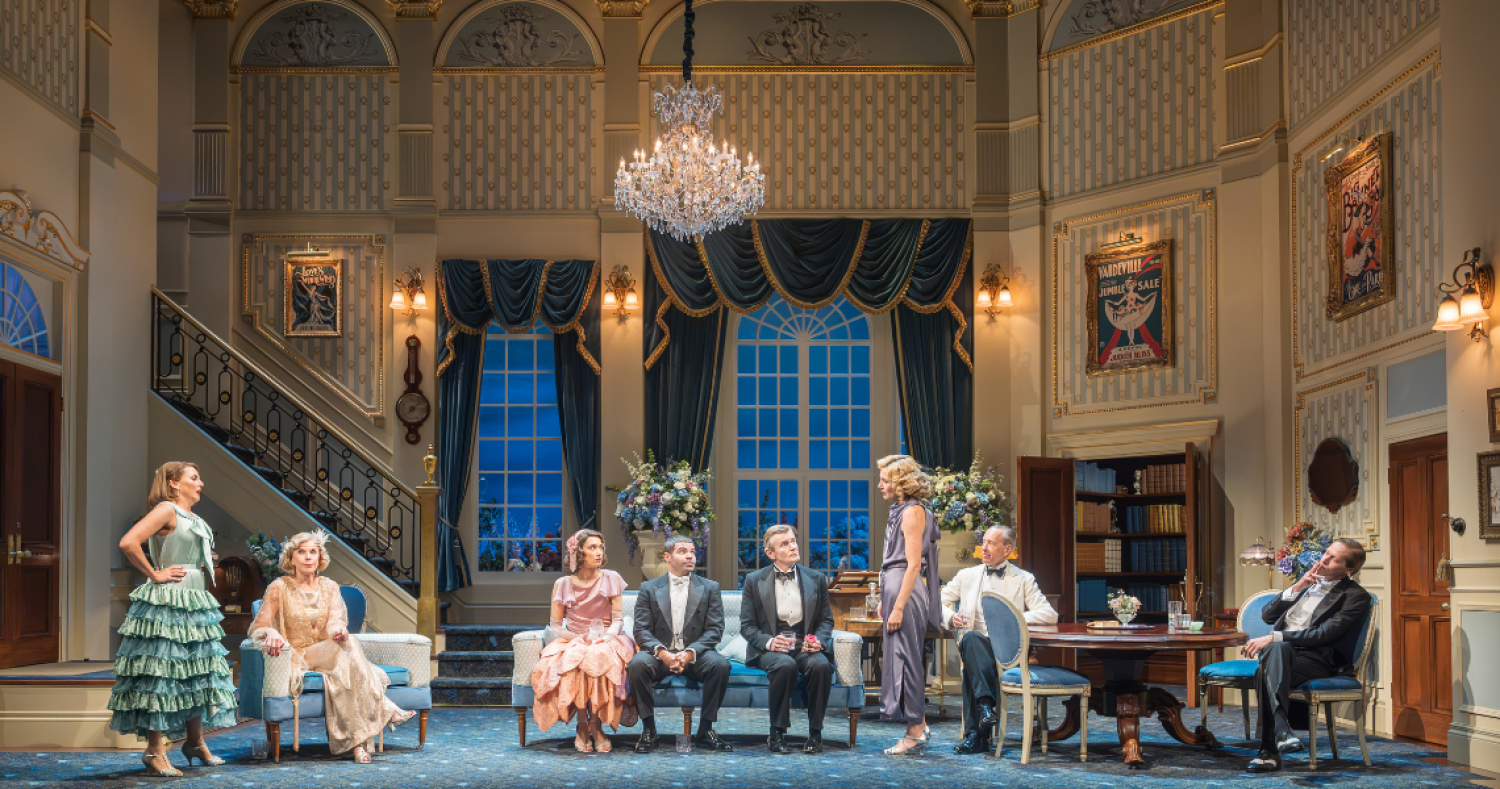
The action takes place in the main reception room of a country house in Berkshire, home to the Bliss family of four, each of whom has invited a house guest for the weekend blissfully unaware that the others had extended their own invitation. Coward’s comedic theme arises from the insular melodramatic antics of the family and the growing embarrassment and alienation of their collective guests.
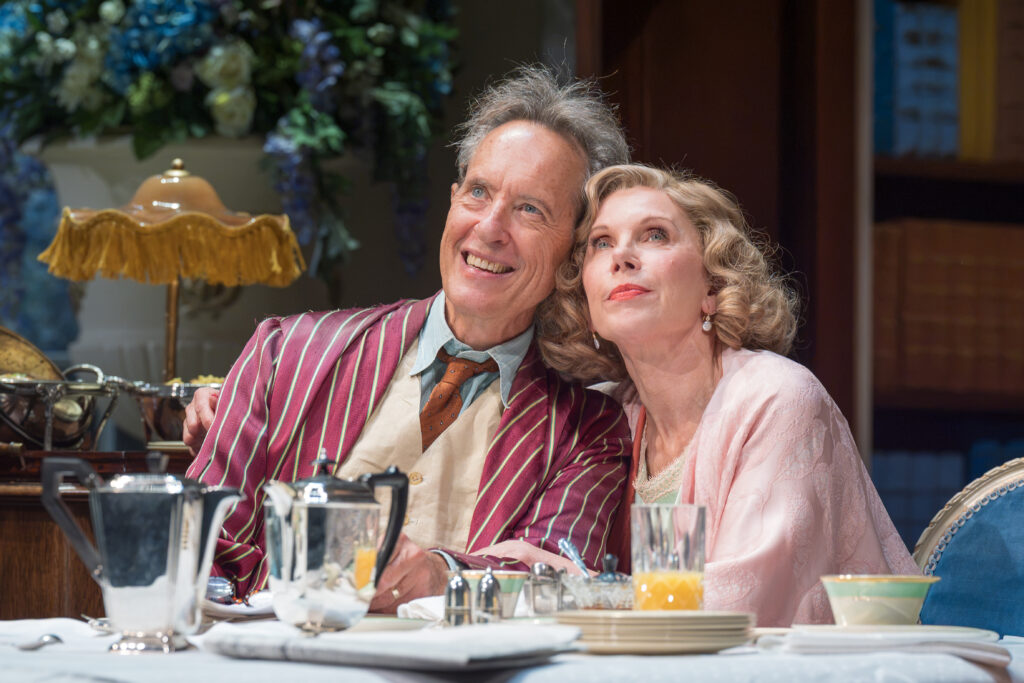
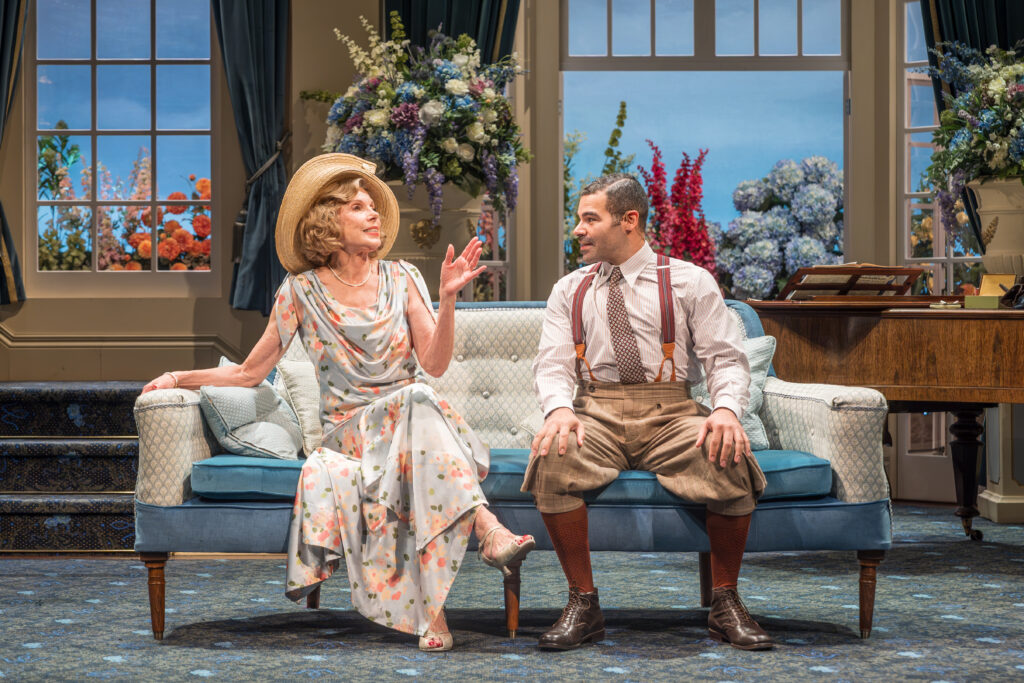
The Bliss family matriarch, Judith, is a retired stage actress of some celebrity, who compensates the unhappy absence of theatrical drama by creating her own domestic play. Over the past century many renowned actresses have taken the role and here it is multi-award winner Christine Baranski who assumes the mantle of this domineering wife and mother with an appropriate air of haughty entitlement and sublime comic timing. The play is worth seeing alone for Baranski’s commanding stage presence.

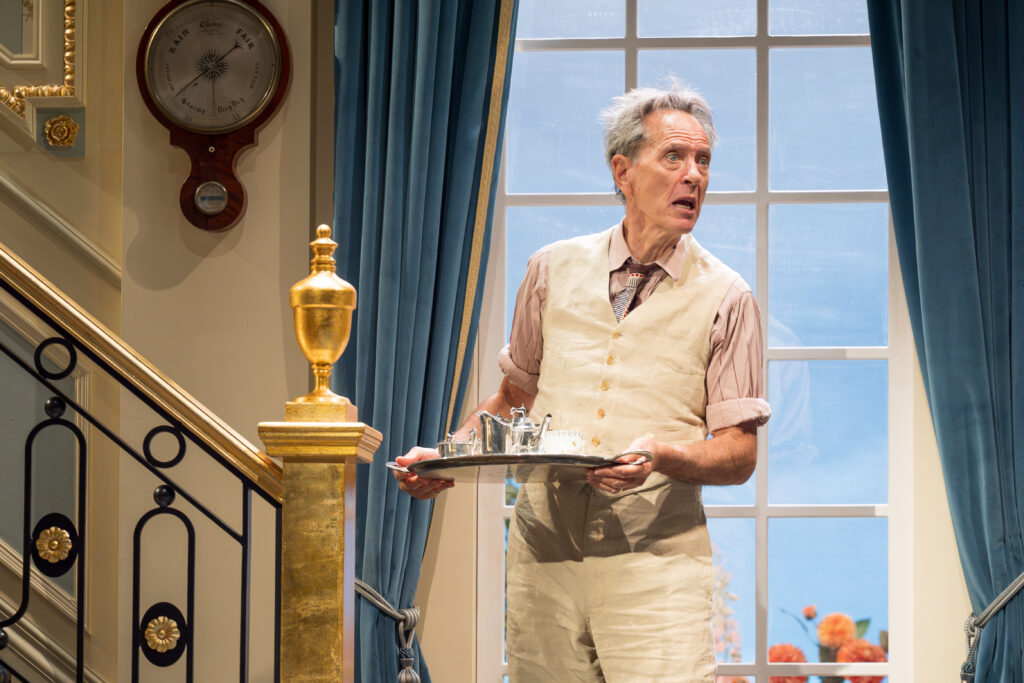
On the same evening that TV screens up-and-down the land were showing Richard E. Grant giving away the game in Celebrity Traitors, here he was playing Judith’s reclusive yet egotistical husband David. He is far more concerned with finishing his latest novel (and reading it to the fam) than he is in attending to his guest, the nervous flapper, Jackie Coryton (a glorious fish-out-of-water turn by Lucy Karczewski), whom David has invited for the purposes of research. Grant, who has far less stage time than Baranski, brought a ruffled urbanity to the self-obsessed writer.
Their two adult children, painter Simon and socialite Sorel are played respectively by Will Close and Ophelia Lovibond. They open the play by oozing sibling rapport and a mutual indifference to social mores that is illustrative of their bohemian lifestyle (my companion was incensed that Simon should recline on the sofa still wearing his dirty shoes)! Close – well remembered for his Olivier Award winning performance as Harry Kane in This England – brought a suitable devil-may-care attitude to his role. His invitee is the seductive Myra Arundell, played alluringly by Nancy Carroll.

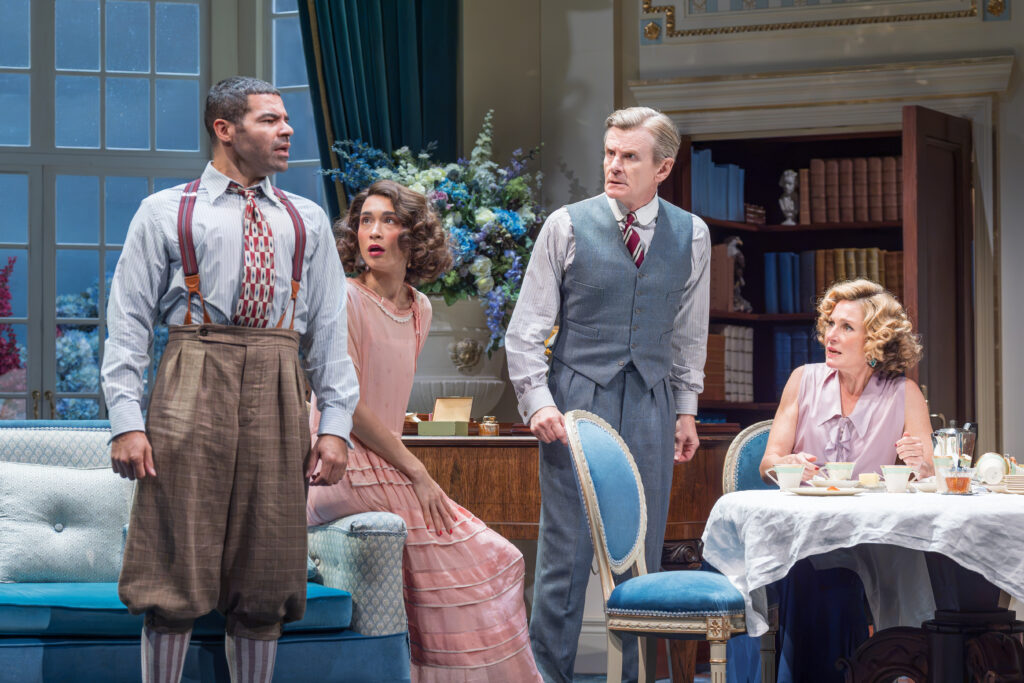
Lovibond was excellent as the high-spirited daughter who has invited the urbane, well-travelled Richard Greatham (a splendid essay in social confusion by Charles Edwards). Judith’s guest is the sporty Sandy Tyrell, the first to arrive, played by Ash Hunter who capably takes on the journey from alpha male arrival to the shot nerves of trying to eat breakfast alone the next day while dreaming of his escape!
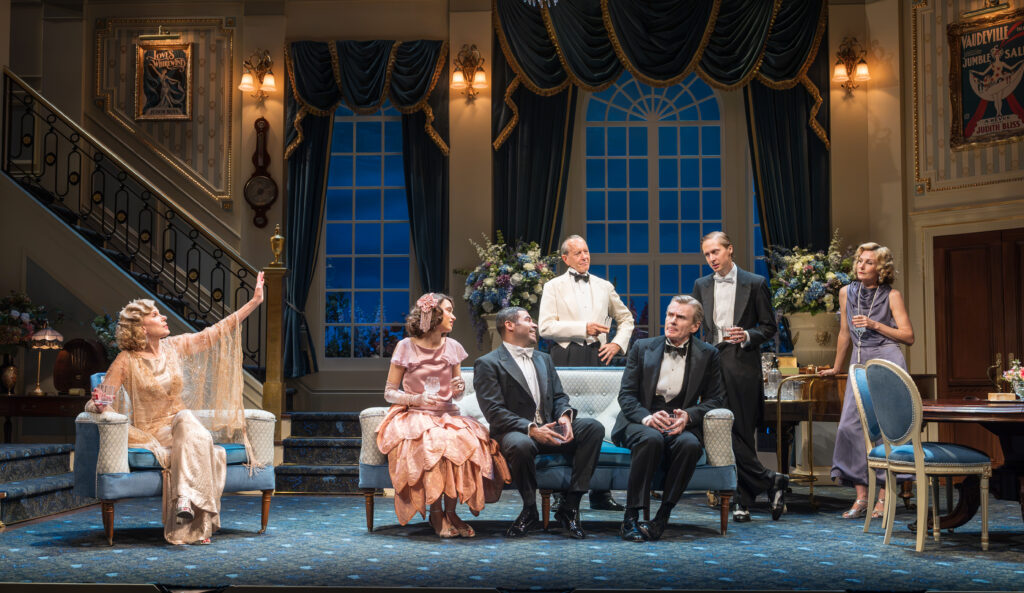
To be successful Hay Fever needs excellent direction (a box ticked firmly by Emily Burns) and a tightly knit ensemble, each actor playing off the others and both the Bliss family and their four house guests were all exemplified in fine style. Emphasising Judith’s recent life as a stage star, posters of her past successes decorate the living room and the ninth character is Clara, her former dresser now employed as housekeeper, played by Jo McInnes as a leit motif of irritability trying to deal with the demands of four unexpected house guests. To make matters worse, each guest had been promised the “Japanese Room”!
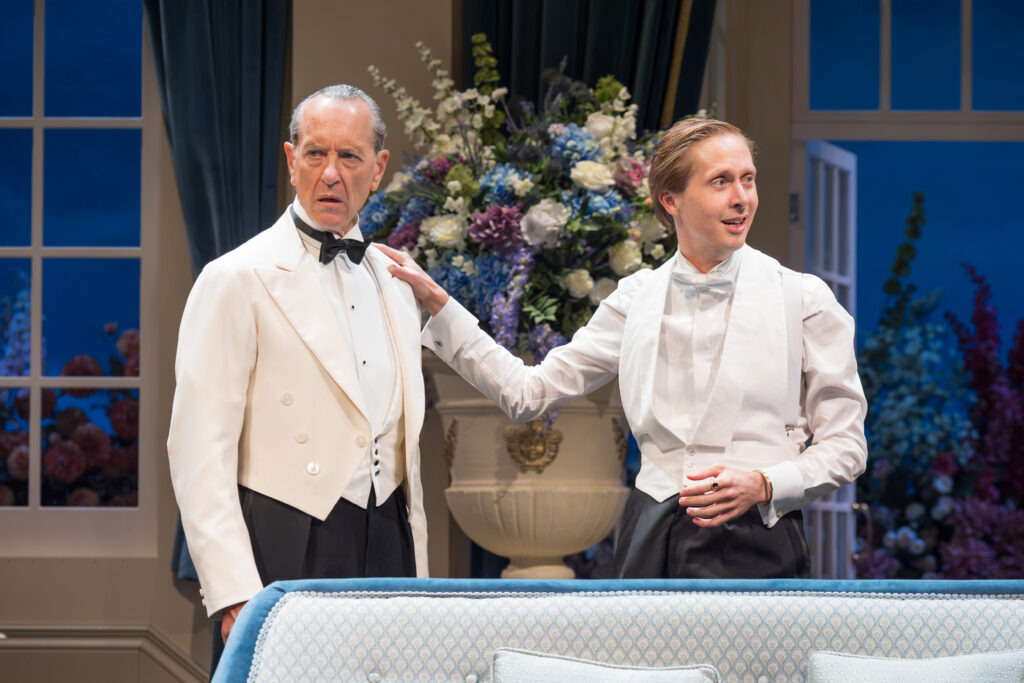

Comedy comes with the farcical entanglements between the family and their guests with, for example, Richard being lulled into giving Judith a chaste kiss that she then exaggerates into a potential cause for divorce; Myra and David make a play for one another; and Sorel takes Sandy into the adjoining library for some more energetic petting. Things get out of hand following dinner (where did Clara get the food?) when the Bliss family embark on theatrical party games that only they seem to understand.
Hay Fever has been beautifully designed by Frankie Bradshaw to reflect the colour scheme and ornate auditorium of Wyndham’s Theatre, with a duck-egg blue suite, matching carpet and curtains. French windows lead into what must be an extensive garden, judging by the length of time characters spend there, which one imagines lead down to the banks of the Thames.
Written at a time when the tragedy and trauma of the First World War and its aftermath were very recent memories from which to escape, this is certainly a play from another age but it’s one that stands the test of time. Coward’s witty writing has a timeless air and some of the visual and vocal gags will never run out of fashion: a barometer suddenly falling from the wall to spoil a quiet escape will always be funny!
Review by Graham Watts – images by Marc Brenner
Hay Fever is at the Wyndham’s Theatre until 12 December. Booking details here: Hay Fever Tickets
For more Culture from bThere Magazine