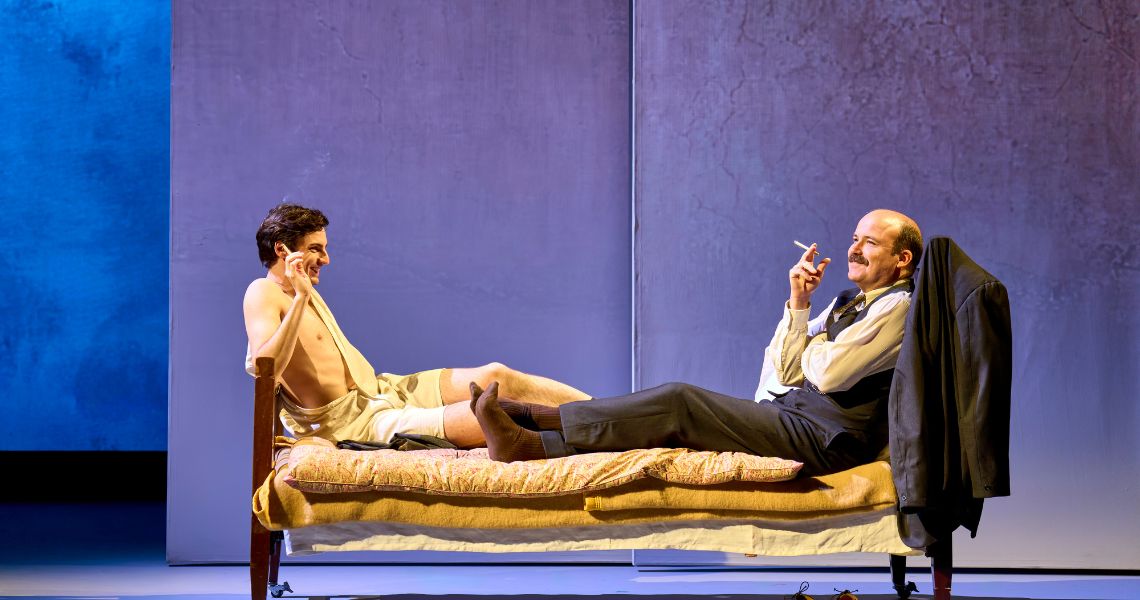
To step inside the extraordinary creative world of stage designer and artist Es Devlin, we sent writer Manjit Patel to the Design Museum to experience Other Worlds, an immersive new exhibition exploring Devlin’s remarkable career, creative process and the ideas that have shaped some of her most iconic work.
I’m inside the Design Museum, branded with the numbers 11:15 on a wristband, alongside thirty others. We are kept in a small red room, well not exactly red, somewhere between red and pink, intensely vibrant. Bags are bundled on laps, familiar groups laugh and shuffle, conversations start to overlap. I turn to the woman
beside me and say: “This is the noisiest gallery exhibition I’ve ever been to.” We laugh and fall into conversation.
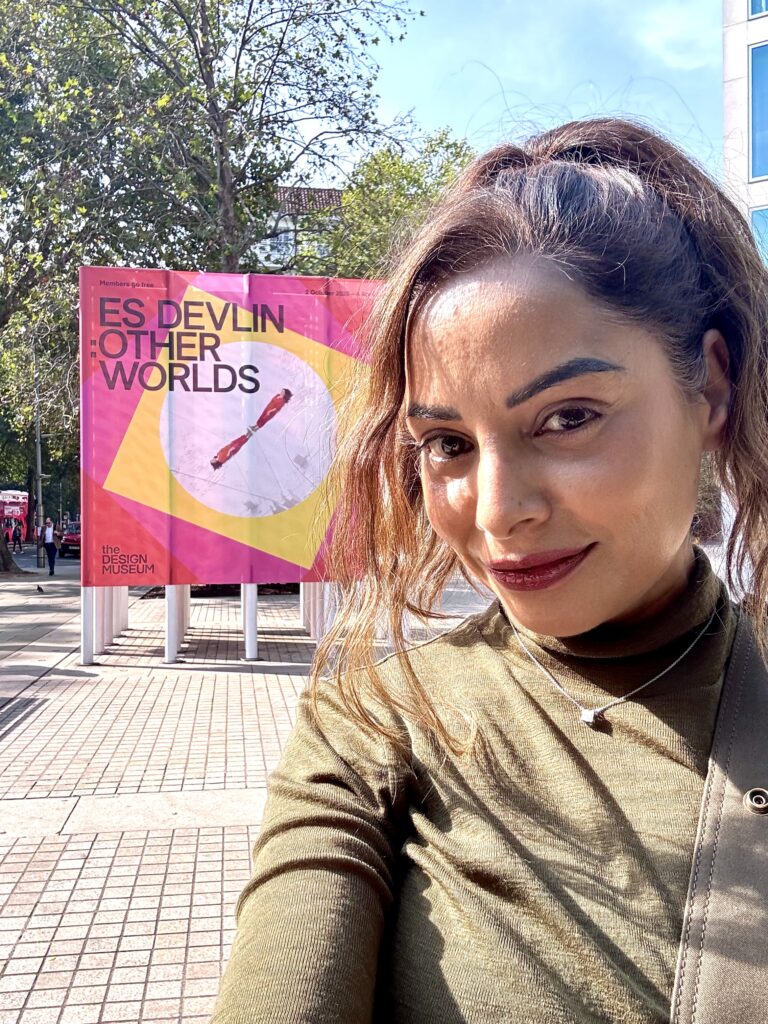
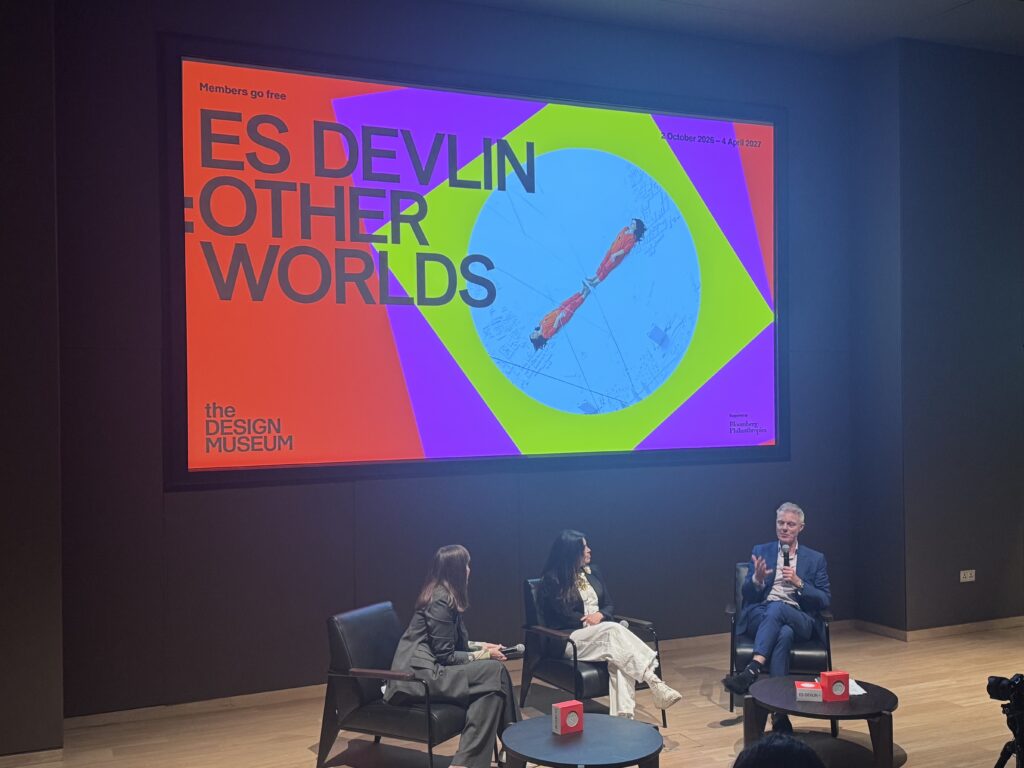
We are waiting for Es Devlin’s Other Worlds to begin. Inside this room anticipation grows. Devlin has a Tony, three Olivier awards and a CBE to her name, so expectations are high. During the earlier Q&A, Devlin described the first five minutes as a small show, a lens through which to experience everything that follows. So it occurs to me that the exhibition has already begun; we are inside this cube experiencing it. Soon enough, time dictates the doors open, releasing us into a completely different world: a replica of Devlin’s Peckham studio.
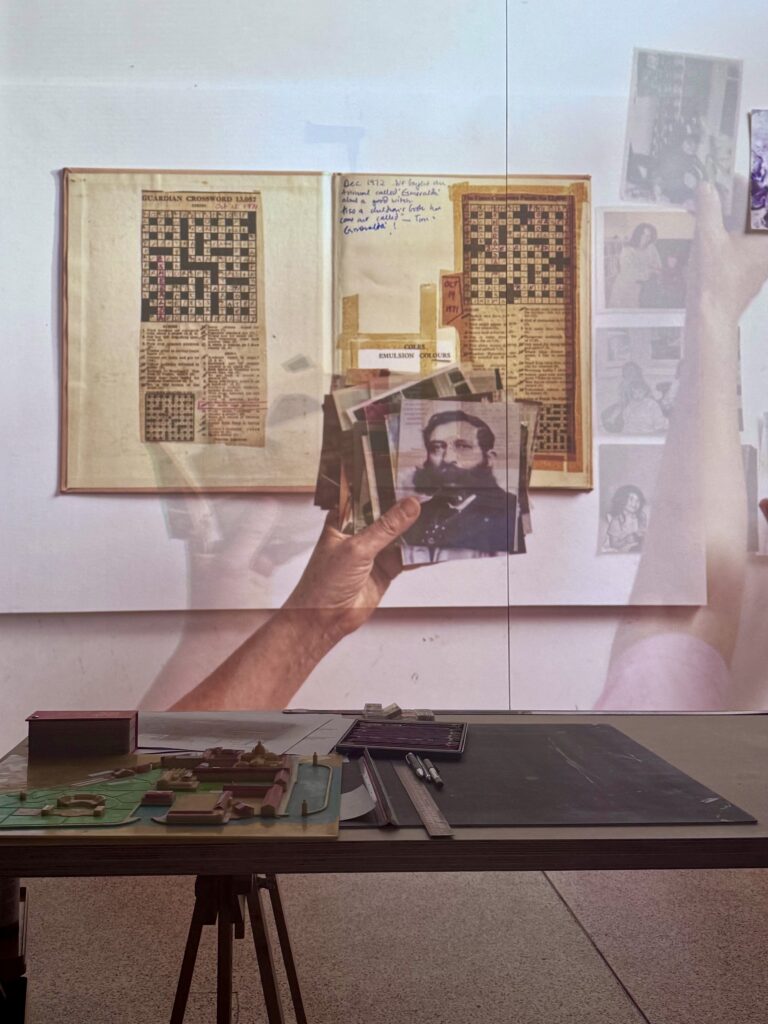
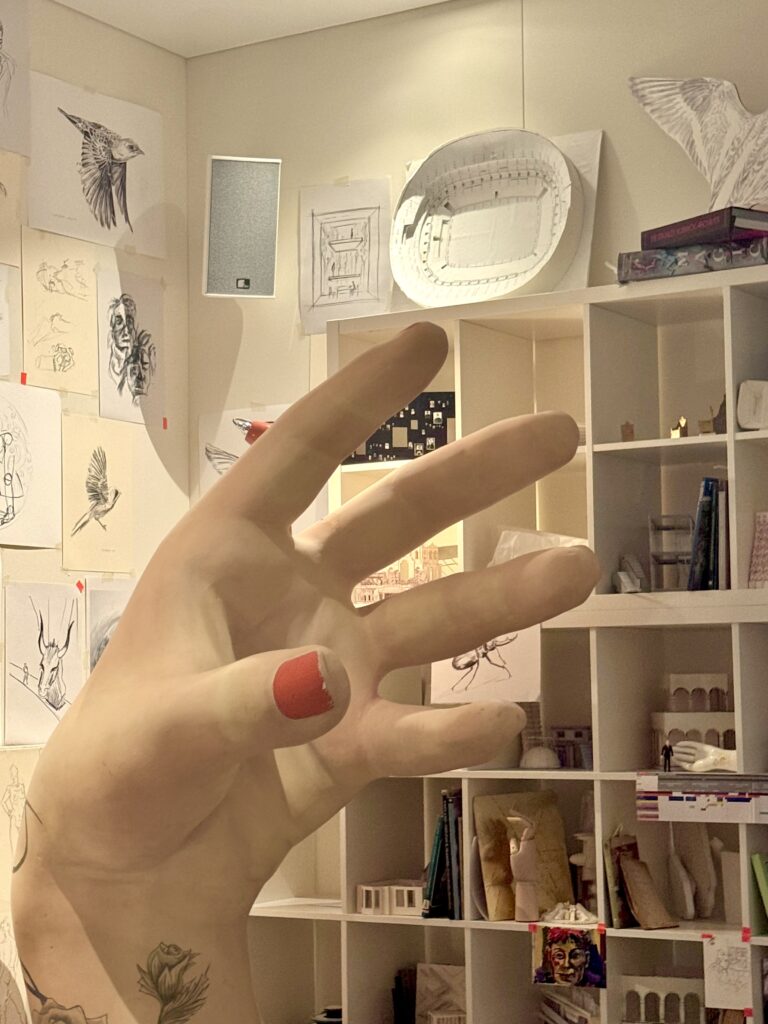
The space is light and calm, despite bursting with all “Devlin’s stuff”: pencils, drawings, cuttings, books and models, comfortably nestled in their natural habitat as Kate Bush plays on the radio. I pull up a seat at her central desk and relax into a projected film. Devlin’s hands turn pages and sketches as she narrates her way through her career, rediscovering herself. It feels intimate. Devlin isn’t present, yet she is everywhere in a multisensory way: her hands, movements, voice, favourite music, and maybe even her humour was filed away, watching us from a desk drawer. It’s the perfect introduction to her: the woman, the artist, the designer whose creations we have probably experienced without knowing her name.
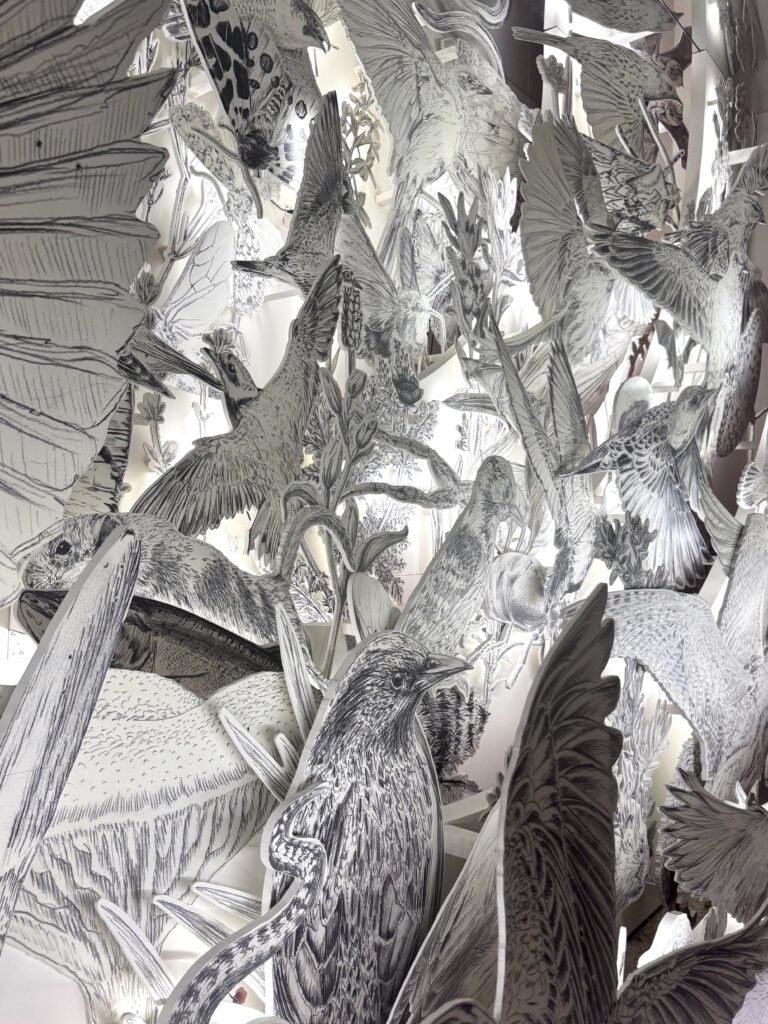
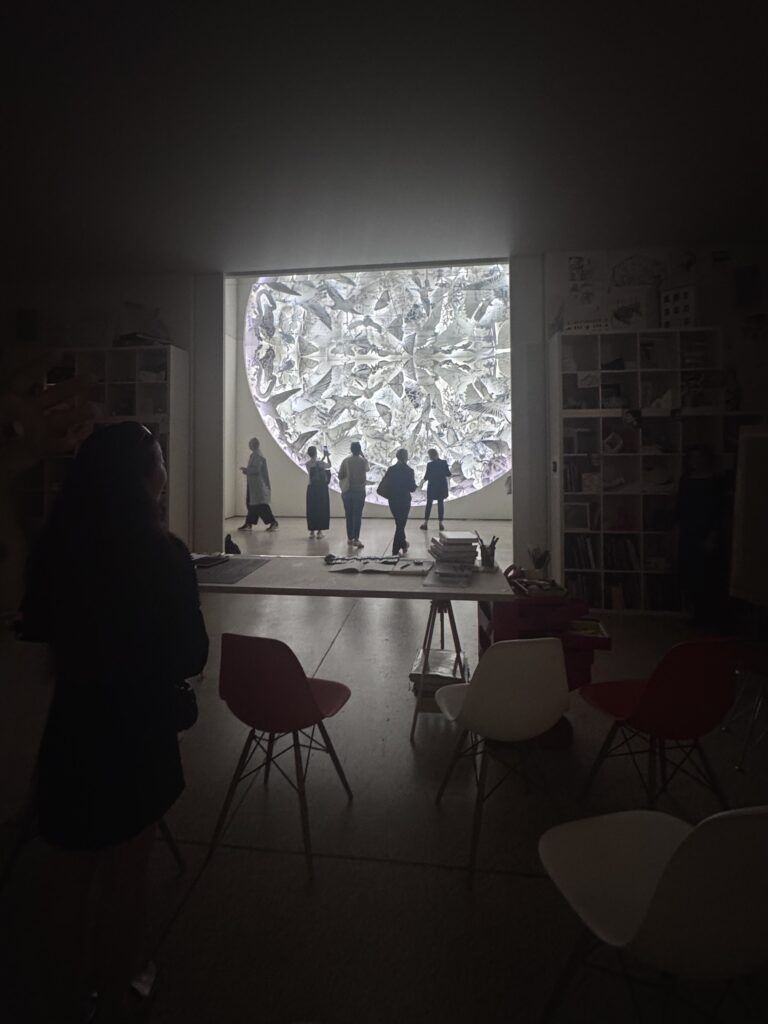
Her projected hands prise open a door; perfectly choreographed with hers, ours open to reveal my favourite installation, Come Home Again (2022), Devlin’s illuminated drawings of 243 endangered London species. Contained within a huge circular composition, these two-dimensional black-and-white beings have never looked so alive in their urgent movement and layered dynamism. As London’s diasporic choirs sing through the soundscape, we, the 11:15 group, gather in unison around their glowing world like moths to a flame.
Geometric forms recur throughout Devlin’s work: circles, cubes, rooms, books. Yet her containment of them doesn’t feel restrictive; it offers clarity, a safe space where elaborate ideas can exist. Look deeper, feel deeper, and the complexity of her thinking begins to unfold.
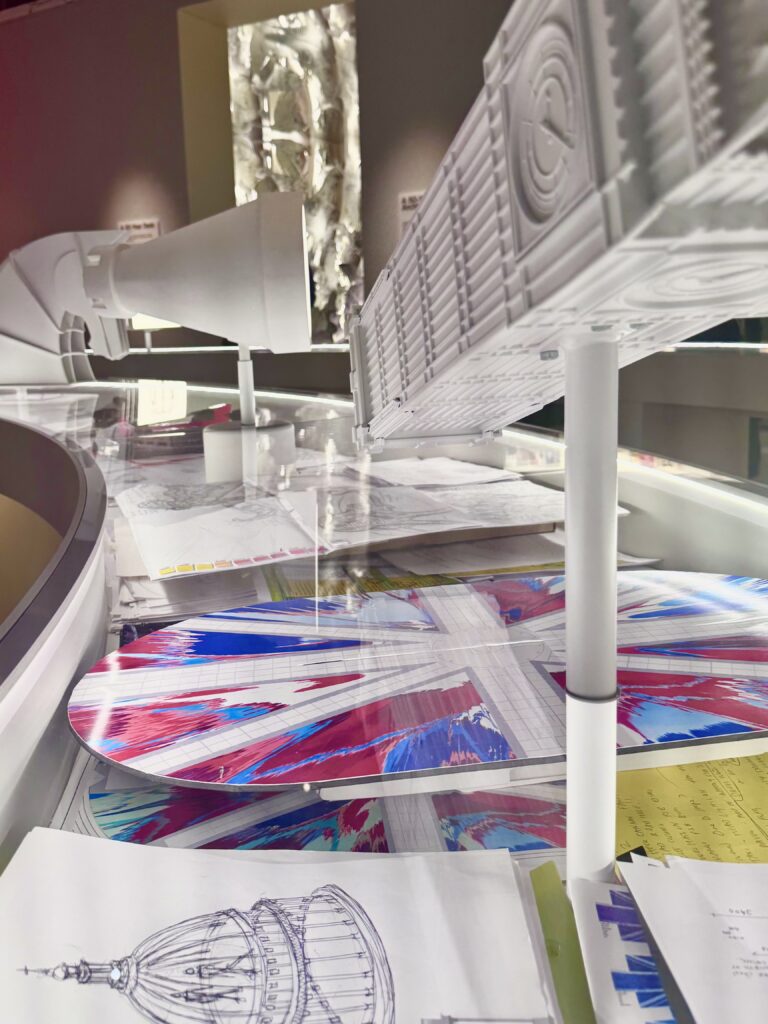
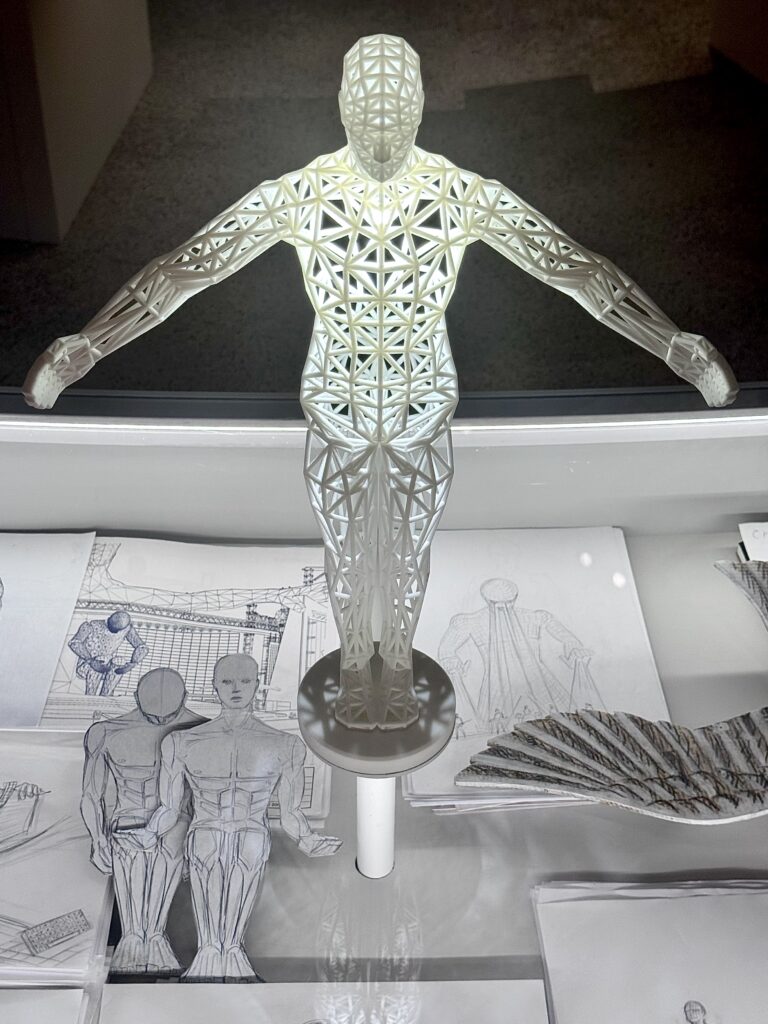
The largest space holds Devlin’s 50-year archive, disguised as a maze. To me it feels less like an exhibition and more like a detective’s case room. Drawings, diagrams, diary entries, words, models and fragments become evidence, each another breadcrumb through the maze of her career.
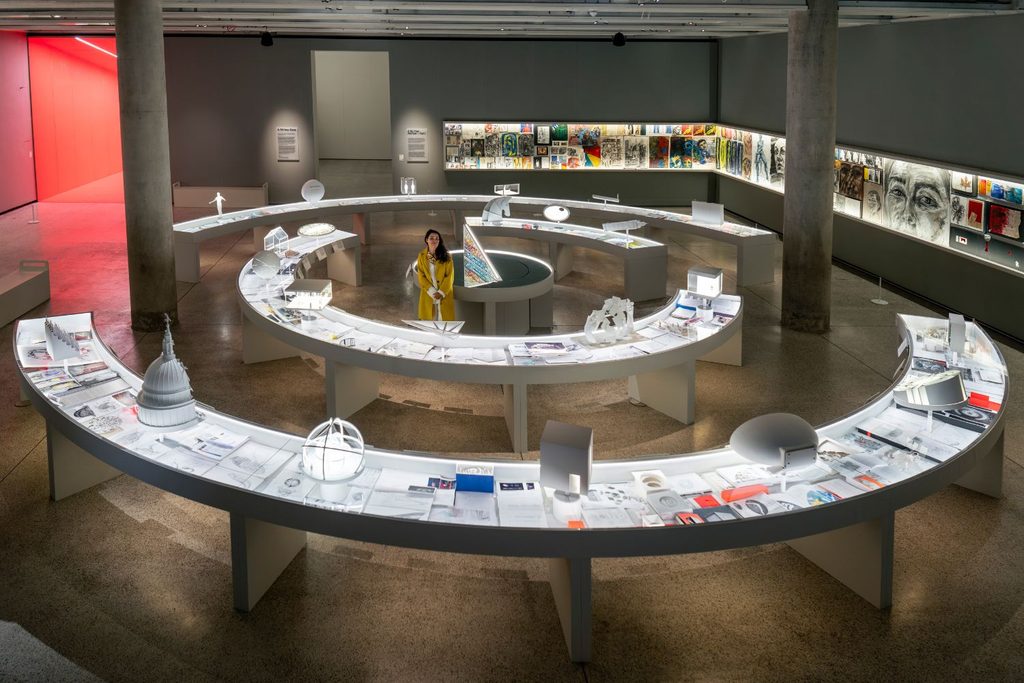
Some clues trigger memories, drawing us deeper into her maze. Kanye’s Touch the Sky stage design and the unforgettable 2012 London Olympics Closing Ceremony are my personal connective points. Beyond these her collaborator list makes for a chunky case file, ranging from Beyoncé and U2 to Adele and The Weekend. Her
stage designs alone have reached audiences globally, yet the name Es Devlin has remained remarkably inconspicuous beside the worlds she creates.
The deeper I dig into Devlin’s history, the less interested I become in simply cataloguing her. I start looking for patterns: theatre, literature, music, architecture, ecology and technology repeatedly collide in her Everythingism. There are plenty of clues, but I wonder: Am I the detective or is Devlin? And what is our motive?
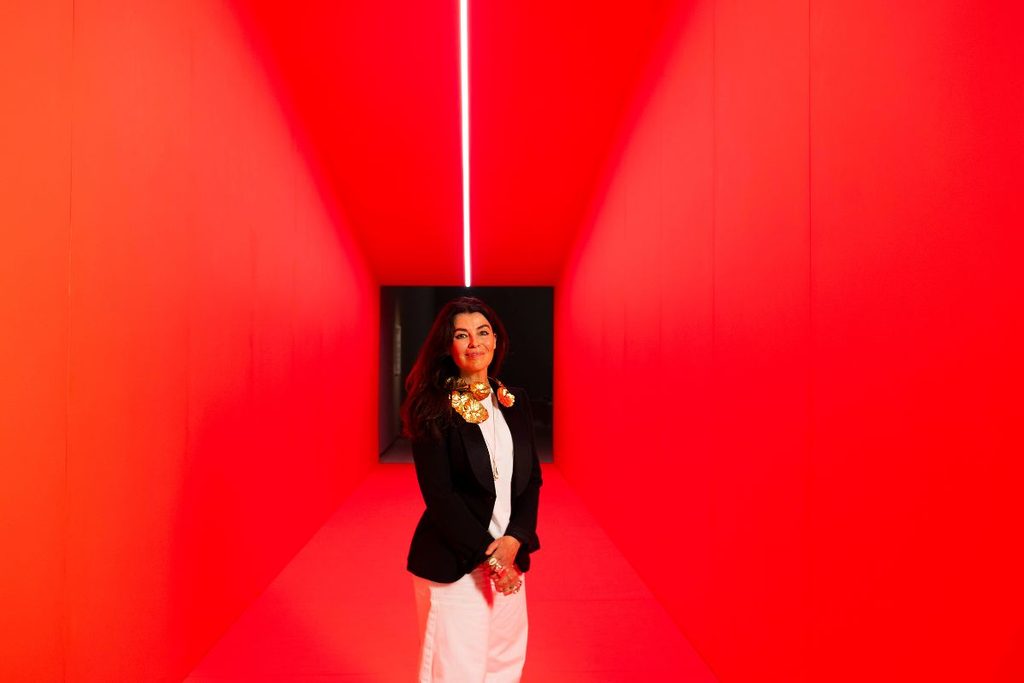
At the end of the maze, her film fills the back wall, and the group is especially attentive to it. Devlin’s voice whispers into our ears and minds, her words lingering while I walk through a very red corridor. It’s reminiscent of those first five minutes. Is this a visual reset? An anticipation walkway? Either way, I realise I am being primed for one final world encounter.
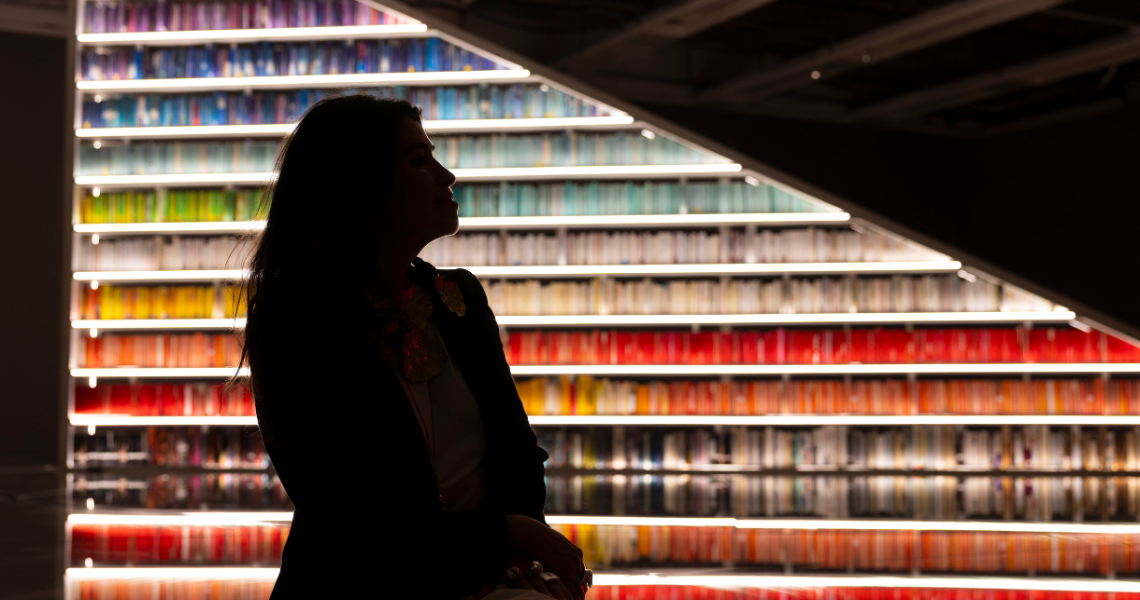
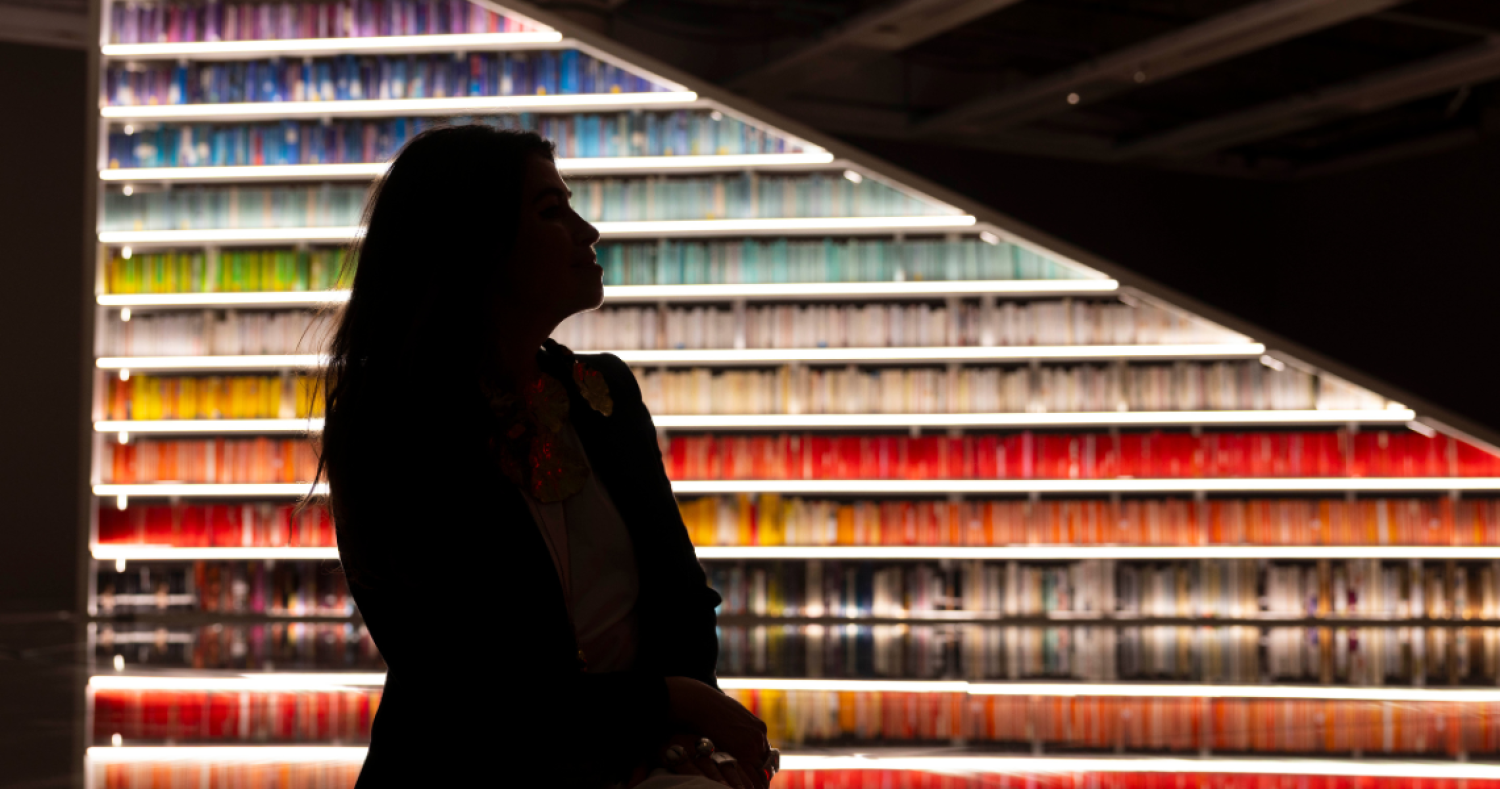
I land at An Infinite Library, a timeless architectural monument: a larger-than-life rotating bookshelf. Triangular in form, it doubles in dimension through a mirrored base. It invites us to stop, as it’s surrounded by a circle of blocks, a book waiting wisely on each, calling us into their world of words.
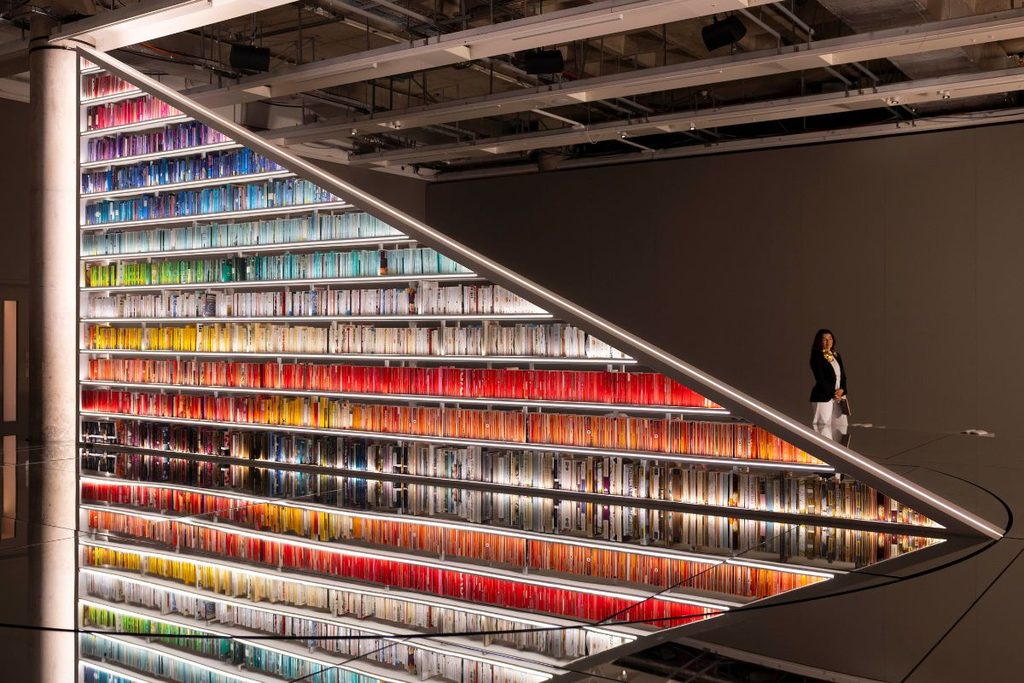
It takes me back to Tuesday morning mass at Catholic school: finding a place amongst a congregation and picking up a hymn book. But here, the altar is Devlin’s collection of 2,000 dearly held books. The structure rotates, giving everyone an equal perspective. We are all equal here. Devlin’s respect for the collective audience, the temporary communities she repeatedly creates, feels ever present. I take my seat and hold the waiting book in my hands.
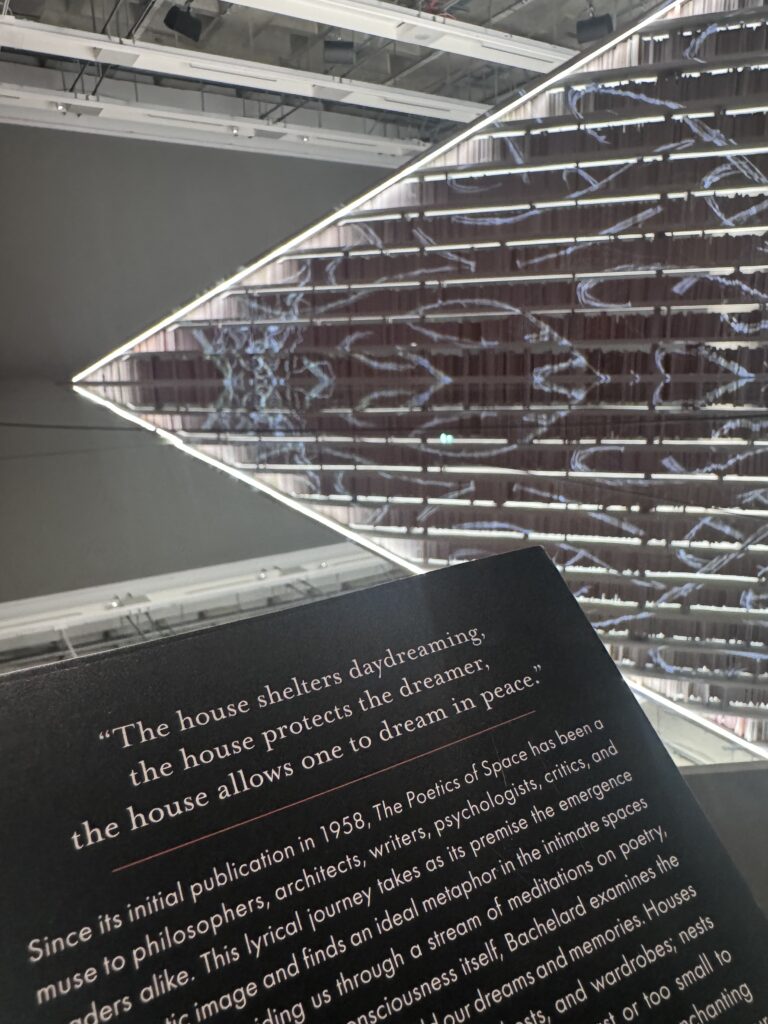
It is Gaston Bachelard’s The Poetics of Space. Its blurb reads: “The house shelters daydreaming, the house protects the dreamer, the house allows one to dream in peace.”
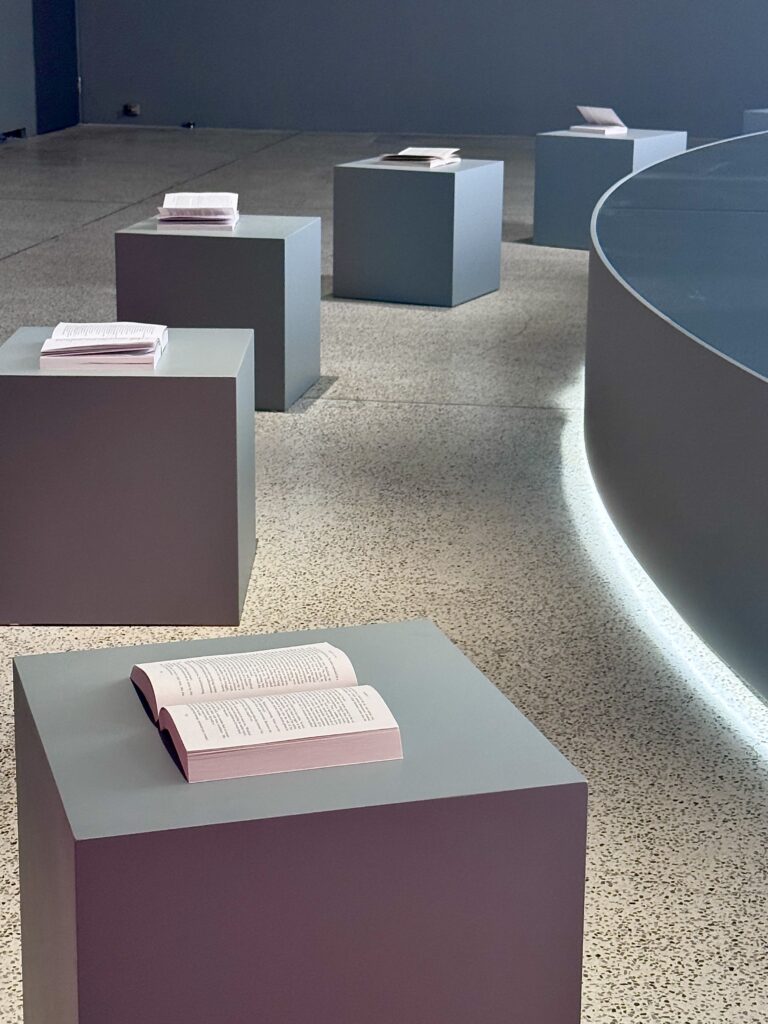
After moving through Devlin’s rooms, forms, memories and other worlds, the final words of the exhibition speak in my hands. Devlin’s words from that morning return: “Thinking happens with the tips of your fingers, and a thought happens in the relationship between a human hand and the materials of the planet….For me, paper
is the least resistant.”
Es Devlin: Other Worlds is showing at the Design Museum from October 2nd to April 4th 2027, tickets are available here.