
Theatre critic Graham Watts saddles up for a West End adaptation of High Noon, bringing a lifelong love of Westerns to this tense and thoughtful review.
I’ve always been a sucker for Westerns, going way back to watching John Wayne get off his horse and drink his milk in cherished memories of sitting in my long-departed Grandad’s den on a Saturday afternoon. A penchant for this peculiar period of American history has stayed with me, from vintage Hollywood to its Spaghetti variety, and High Noon stands tall as one of the most memorable movies of all time.
Given the significance and popularity of the genre, it came as a surprise to realise that no producer has previously attempted to translate a western/cowboy film onto the West End Stage (Oklahoma is certainly a cowboy film but set in 1906, it portrays a time after the era of the “western”). And it is easy to understand why, since taking the wild outdoors, horses, and all, and placing it in the static, narrow confines of a stage is a substantial risk.
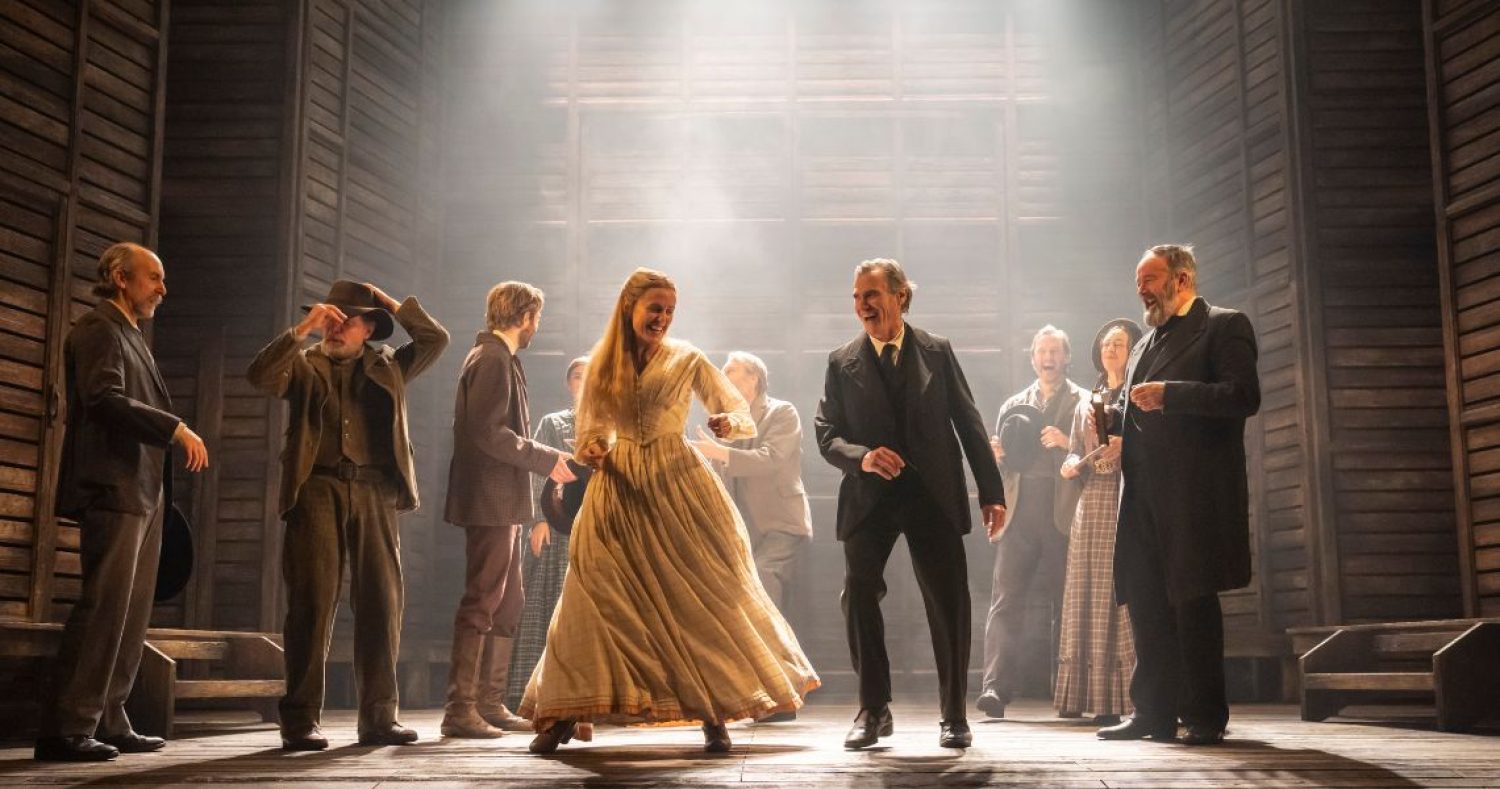
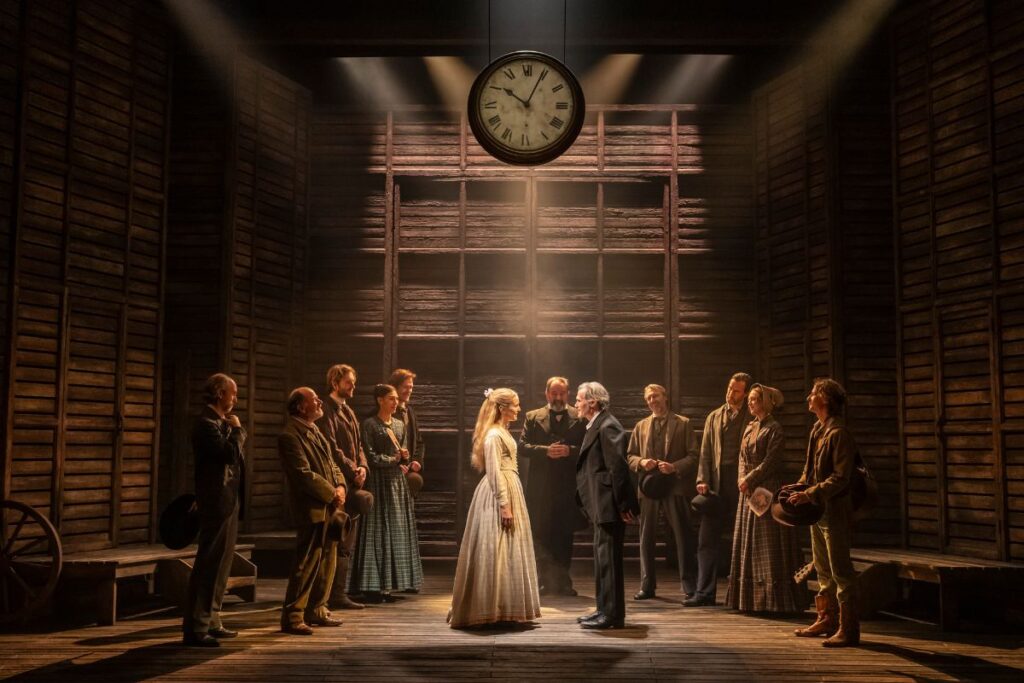
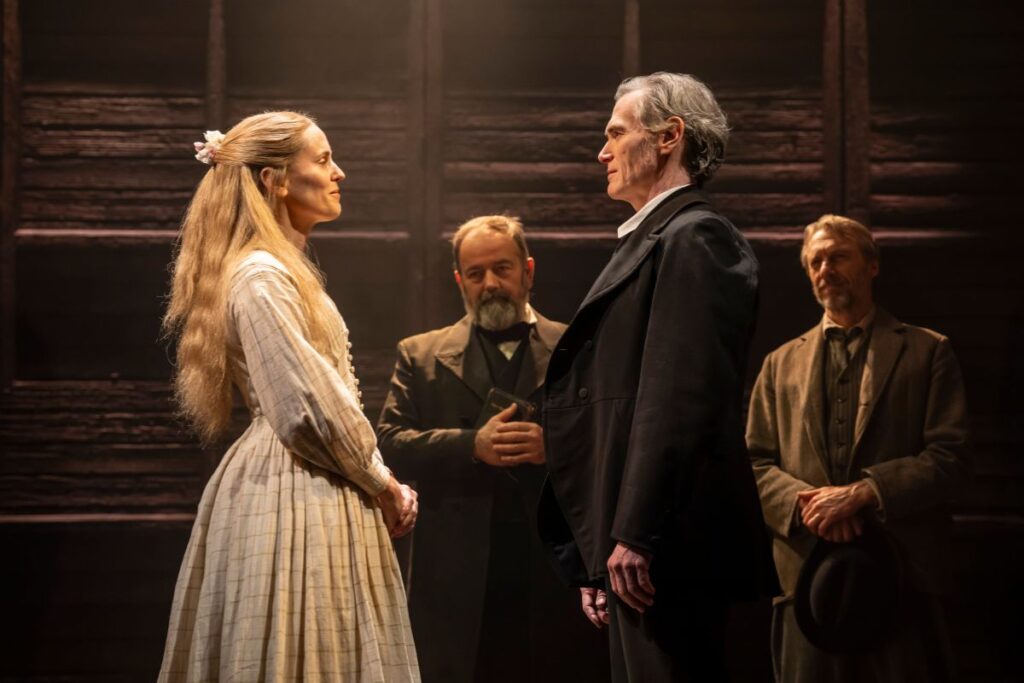
Does the risk work? Well, mostly! Eric Roth has written an excellent theatrical adaptation of the script, updating it to suit more relaxed modern tastes while building the tension superbly, and – especially given the constraints of the small stage – Tim Hatley’s minimalist, rustic designs of roughly-hewn wooden slats were excellent generic representations of all the internal scenes, realistic of place and period.
Thea Sharrock’s direction maintained the pulsating momentum of the film, following suit in taking place in real time. A clock placed strategically above downstage began at 10-15 and moved inexorably towards noon as the play continued (without an interval, of course). There were times when the clock seemed to go very slowly and others, particularly towards noon, when it appeared to rattle along.
The performances were, without exception, from each actor’s top drawer. Billy Crudup had no need to try the impossible and mimic Gary Cooper’s Academy Award winning performance as the Hadleyville marshal, Will Kane, who discovers immediately after his wedding and retirement that a villainous outlaw, Frank Miller, has been unaccountably released for gaol and is heading to seek revenge on Kane, the man who had him imprisoned, arriving by train at noon.
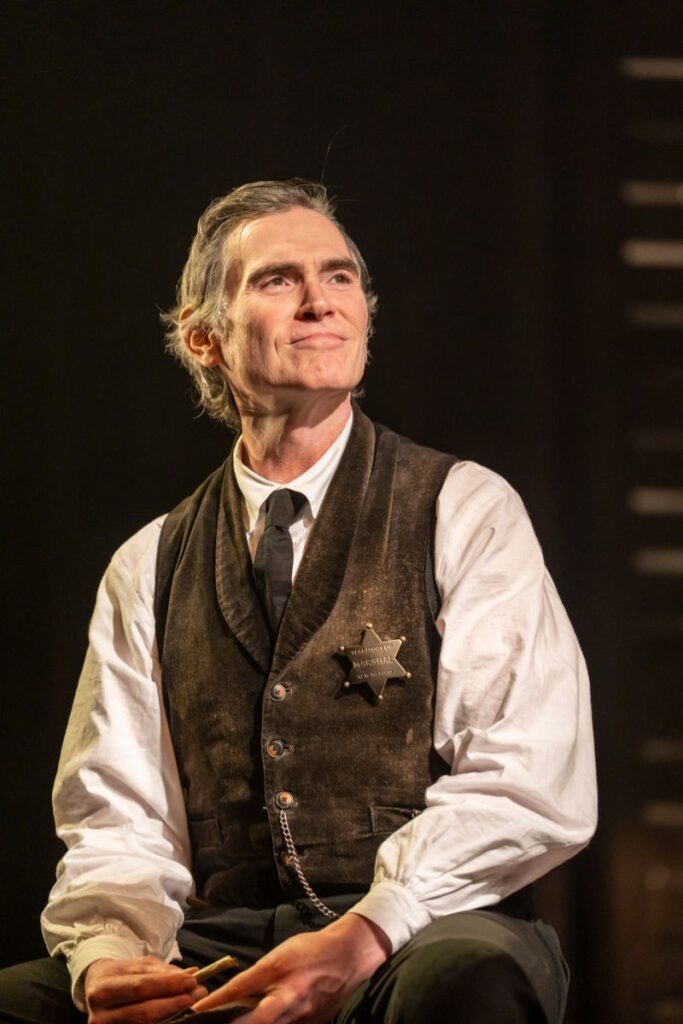
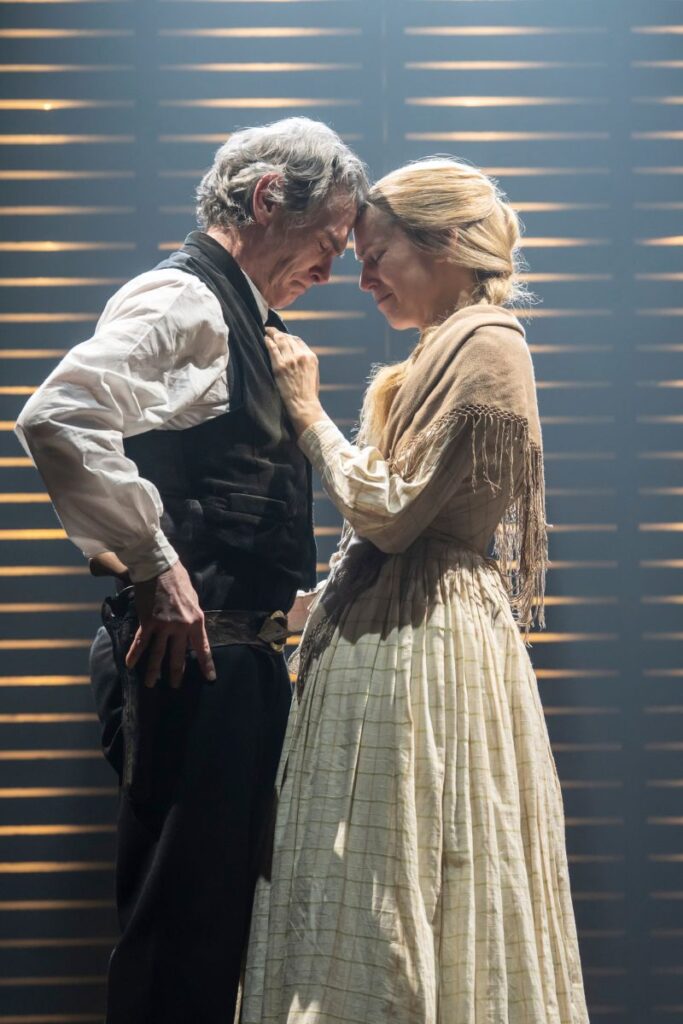
One-by-one, the same townspeople who lauded Kane on his marriage and retirement (after 17 years maintaining their law and order) refuse to help him in the impending shoot-out, leaving Kane alone to face Miller and his associates (there is one less in the play than in the film). Whereas Cooper was an all-American, stoic hero, Crudup’s Kane is increasingly fractious, riven with age-related self-doubt, but although scared, still possessed of the sense of honour that prevents him from running away.
Matching Crudup’s excellence all the way were coruscating performances by the two leading women. Denise Gough gave an outstanding interpretation of Amy Fowler, Crudup’s Quaker wife who abhors violence and has made her new husband relinquish his gun. The tension between her love for her husband and her hatred of violence is palpable, ending in a denouement that is still surprising, even though it should be predictable. Rosa Salazar brings a strong sense of survival and pragmatism to the wise feminist character of Helen Ramirez who has been the lover of both Miller and Kane (not to mention also his ambitious deputy, Harvey Pell, played with enthusiasm by Billy Howle).


Everyone who can recall the film, will remember the song – “…do not forsake me, oh my darling, on this our wedding day,” – which became a huge popular hit in the 50s. Its not sung here although the refrain is played at the beginning and end by a solo guitar but the characters – most often, Gough – frequently break out in acapella song, oddly mostly standards by Bruce Springsteen. These intrusions into the dramatic action were themselves mercifully brief (and Gough has a fine voice) but they didn’t really add to proceedings, and increasingly I found them irritating.
It would be wrong not to reference the political undercurrents of the 1952 film, which emphasised Kane’s sense of duty against the will of the crowd as a subliminal protest against the witch hunts of the House Un-American Activities Committee (the film’s screenwriter, Carl Foreman was blacklisted); nor in this modern remake, which contains key passages of text that can be interpreted as anti-Trump. But it would also be wrong to make too much of this, since both the film and this play present spine-tingling drama on their own account.


While the play worked well, the “outdoors” scenes required a considerable stretch of the imagination, and the climactic gunfight was a damp squib after the outstanding tension that had built throughout the preceding hundred minutes. Miller (an imposing James Doherty) his brother and their associate were thinly drawn opponents, and – no spoilers here – the events of the gunfight were a tad confusing.
Nonetheless this interpretation of High Noon is much more than a pastiche of a magnificent film. It moves along with pacy momentum and enjoys outstanding performances throughout.


