
Great artists are always seeking to expand their horizons. In ballet, one can see that exploration in the later careers of Rudolf Nureyev (working with such modern dance greats as Murray Louis and Martha Graham, and even considering a career as a conductor) and Sylvie Guillem, who extended her career by collaborating with such choreographers as Russell Maliphant and Akram Khan. The same thirst for newness drives the craft of Natalia Osipova.
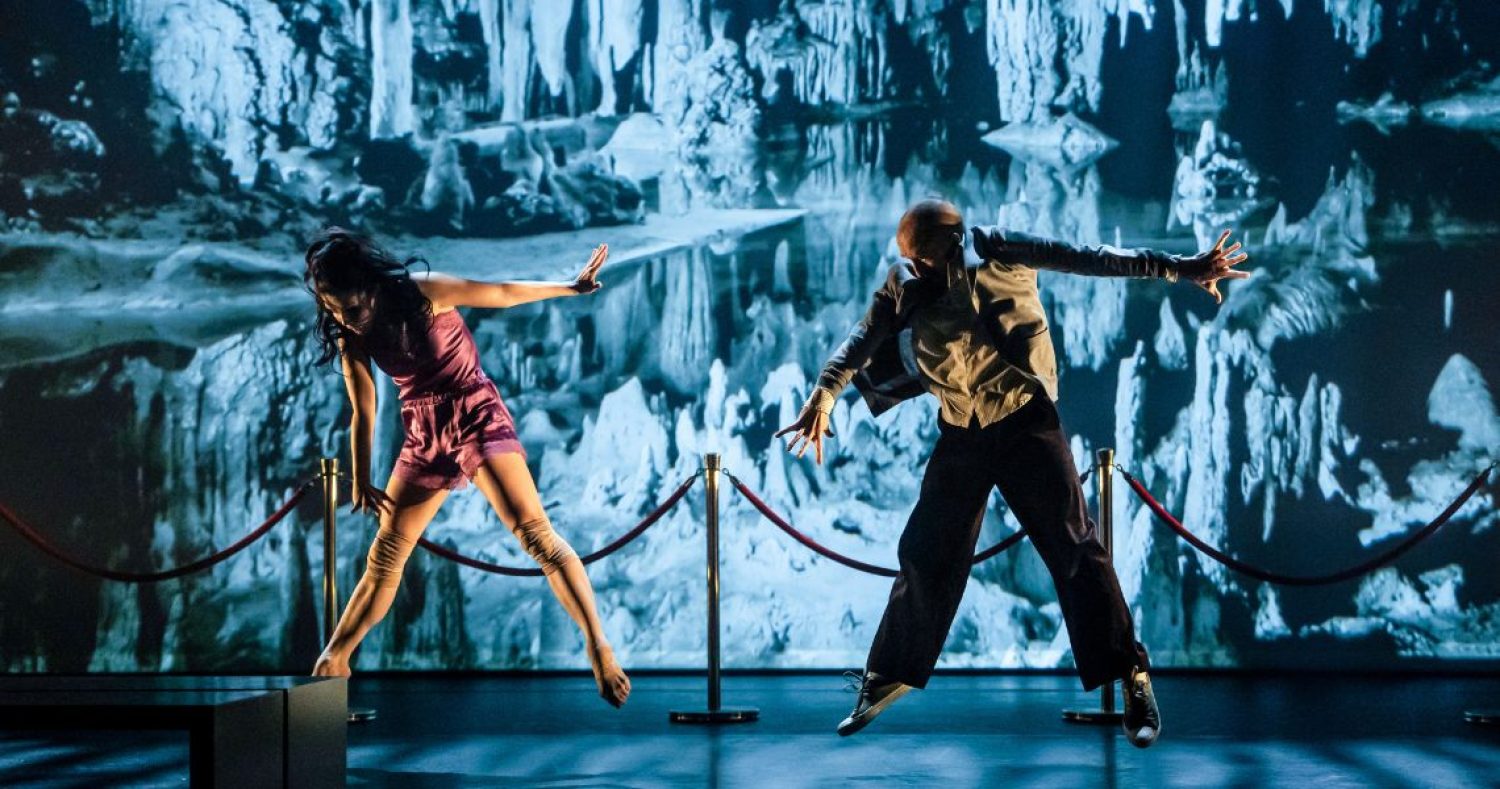
This spirit of inquiry is amply illustrated in this programme at the Linbury Theatre, in the basement of the Royal Opera House. It opened with a faithful revival of Martha Graham’s striking Errand into the Maze and closed with the world premiere of Jo Strømgren’s The Exhibition. Both these live works were duets: Marcelino Sambé played the Minotaur to partner Osipova in the opening work, and Christopher Akrill joined her for The Exhibition.

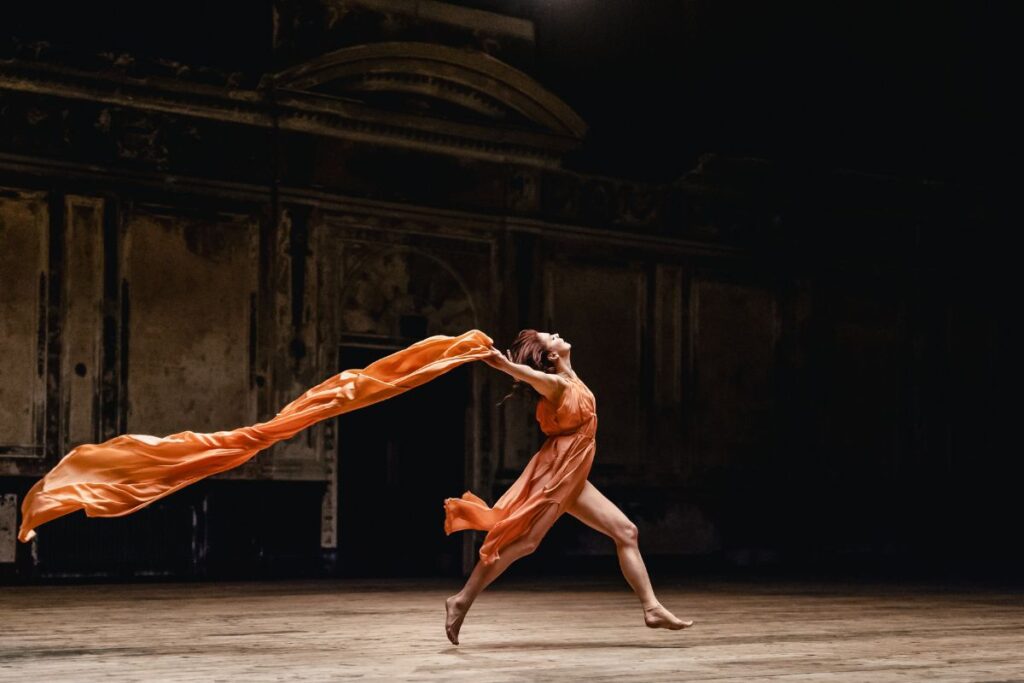
In between these works was an outstanding filmed performance of Osipova in Frederick Ashton’s Five Brahms Waltzes in the Manner of Isadora Duncan. Directed by Grigory Dobrygin and filmed in the cavernous space of North London’s Alexandra Palace, it ranks as one of the best films of pure dance that I’ve seen in a long time, a quality that is due to highly professional production values but also mainly to the intimacy of watching one outstanding dancer pay homage to another. The close-up camera work captured fine detail in Osipova’s passionate commitment to Ashton’s extraordinary choreography.
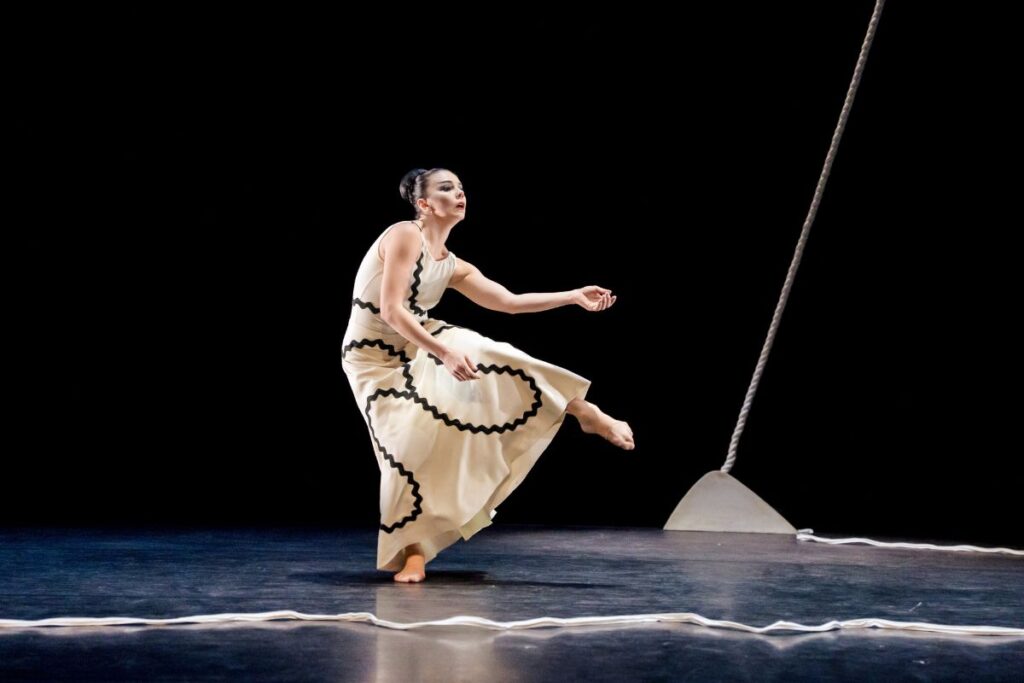
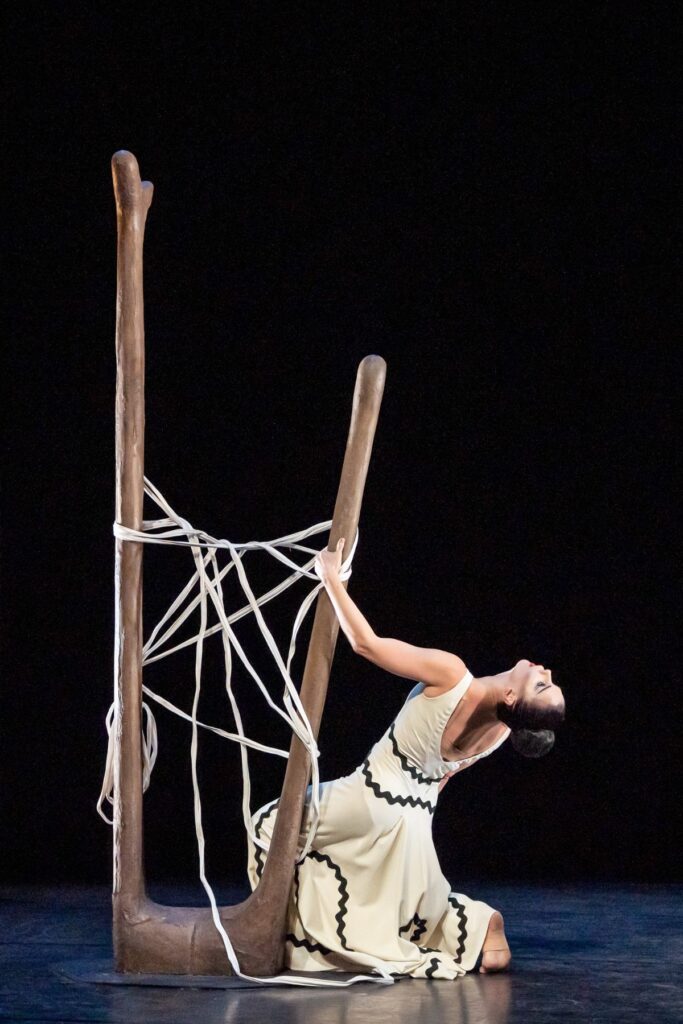
Errand into the Maze was created by Graham in 1947 and, although barely fifteen minutes long, it has remained one of the most popular works from her prolific output. The female dancer is at the heart of the action, confronting the Minotaur, a creature that represents her fears, exacerbated by being trapped in the maze (the striking set design by Isamu Noguchi) with the marauding creature. Although Sambé brought dynamic athleticism to this bull-horned threat of sexual predation, holding a staff at the back of his neck while performing virtuoso jumps, it is Osipova (in the unnamed female role that Graham created upon herself), who dominates the action, both expressively and in her command of Graham’s movement, eventually overpowering the creature into submission. At its core, this is a feminist work about women conquering their fears, and it was good to become reacquainted with it.
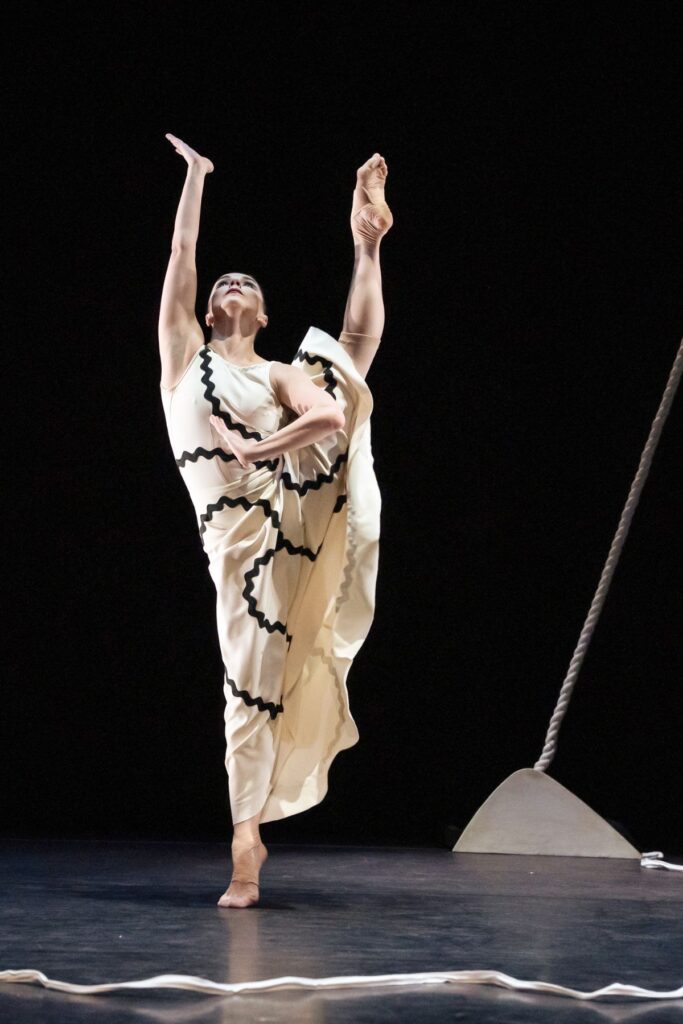
The biggest stretch for our star was in Jo Strømgren’s physical theatre, a work in which Osipova was comfortable in large tracts of spoken text (much of which was in her native Russian). I have long admired Akrill’s work, and he was outstanding as the mild-mannered exhibition visitor whose viewing is interrupted by this strange Russian girl. The chemistry develops as their association journeys from mutual hostility to a gradual harmony, as exhibited in brief, explosive dance sequences. Strømgren’s creation of the superb tragi-comic character of Clas Göran in Scandinavia (in The Tired Man and The Substitute) had already convinced me of his genius in creating comedic physical theatre, and The Exhibition has confirmed that view.
Tickets are available here.


