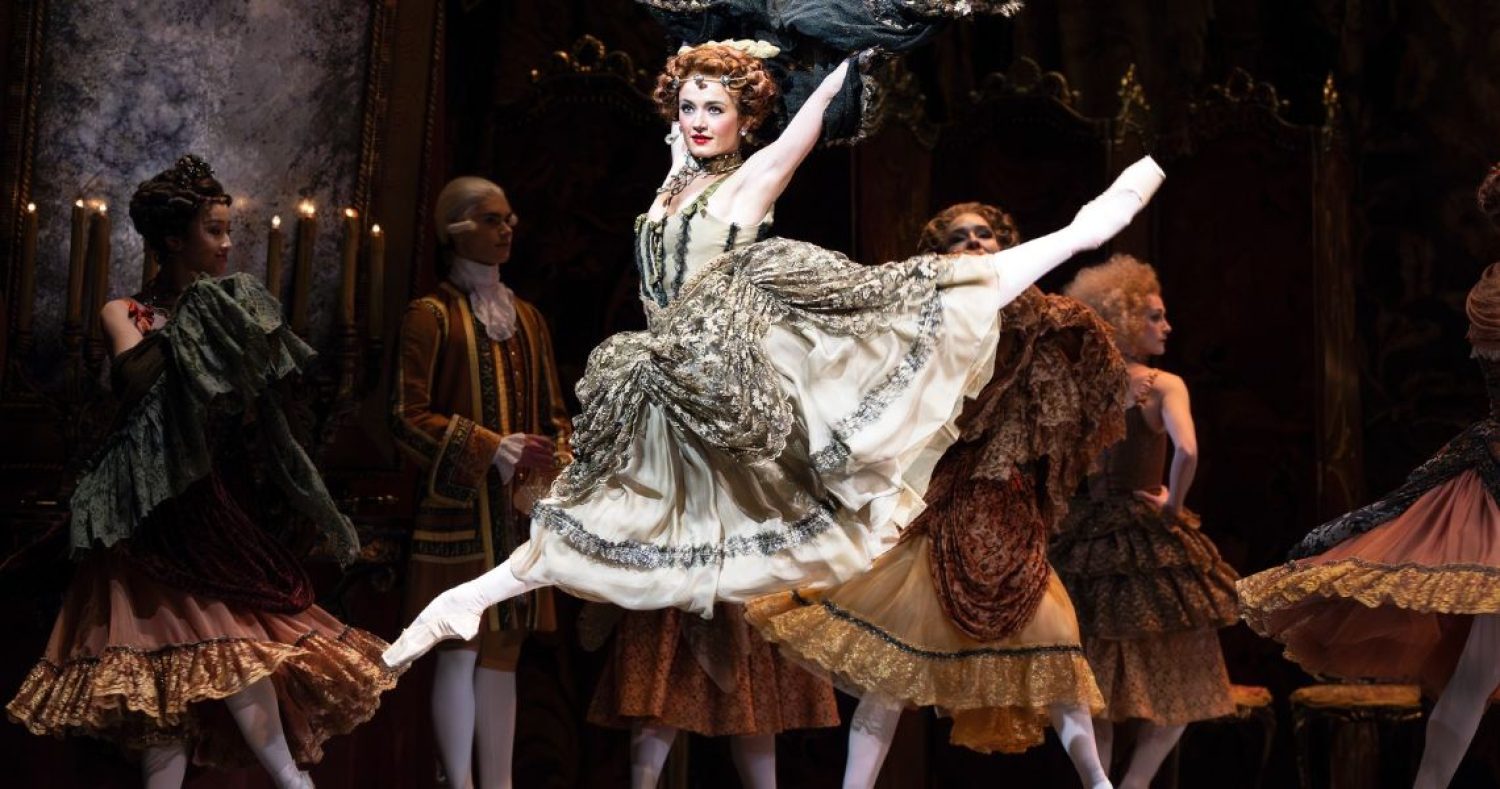
In this Manon Royal Ballet review, Graham Watts OBE, Culture Editor of bThere Magazine, considers the enduring appeal of Kenneth MacMillan’s tragic masterpiece as it opens The Royal Ballet’s 2026/27 season, 52 years after its creation and with productions also gracing stages in Paris and Prague this autumn.

It can’t be happiness that makes it so sought after since this is a tragic and rather sordid story, adapted from Abbé Prevost’s 18 th century French novel. Even the innocent, pecunious student Des Grieux ends up cheating at cards, wounding a man in a duel and stabbing another in the back, although all in the cause of true love.
Like MacMillan’s two other blockbuster full-length ballets (Romeo and Juliet and Mayerling) it’s a tale of doomed love. Manon falls for Des Grieux in a “love at first sight” encounter but is pimped to the highest bidder by her unscrupulous brother, Lescaut, and seduced by the furs and jewels on offer from the rich, foot-fetishist Monsieur G.M. Fast forward from that card-cheating and subsequent sword fight (G.M. being the wounded duellist) and onto deportation via a convict ship to Louisiana and after being raped by her gaoler (the man stabbed in the back by Des Grieux) and escaping, Manon eventually dies of exhaustion and exposure in a hallucinatory haze in the swamps, still accompanied by her doting student lover. There’s not much joy to be found in this ballet!
There is, however, unbounded pleasure in The Royal Ballet’s performance with half a century’s experience etched into every second of this memorable revival. The designs of Nicholas Georgiadis shouldn’t work, particularly with the ridiculously tall bed and wardrobe in Des Grieux’s bedroom and the pitiful hanging streamers to represent the mangroves of Louisiana’s swampland, but they do, so well that they have become much loved symbols of this classic ballet.

The original composite of Jules Massenet pieces, originally arranged by Leighton Lucas, with the help of Hilda Gaunt, and subsequently reorchestrated – in 2011 – by Martin Yates, conducted here by the irrepressible Koen Kessels, provides the right aural mood and descriptive character themes throughout all the diverse aspects of this danced drama. At the opening night, Manon was portrayed with a feisty zest for adventure by Francesca
Hayward, falling in love with the earnest Des Grieux from almost the moment of her arrival by carriage into the courtyard of an inn near Paris but then being seduced by the prospect of a life of luxury with Monsieur G.M. Hayward danced divinely, partnered excellently by Marcelino Sambé who brought a sense of both vulnerability and determination to his reading of Des Grieux.
In a later cast, it was a delight to welcome back Cesar Corrales, debuting in this role after a long lay-off through injury. He has returned to the stage with great virtuosity allied to a burgeoning maturity in his expressive acting. His Manon was Akane Takada, a beautiful dancer who I have long admired. She was a softer, more vulnerable Manon, dancing delightfully and with great chemistry in her partnership with Corrales. One felt their love, their excitement and their pain.


Elsewhere in the opening night cast, Joseph Sissens was a cheeky, scheming Lescaut, dancing the highlight drunken solo and duet with his mistress with great brio and comic timing. Anna Rose O’Sullivan was a delight as his much abused yet still fiercely independent mistress, and somehow, she seemed to bring out more in this role than is the norm. Bennet Gartside was a suitably loathsome and lustful Monsieur G.M, bringing a range of expressiveness to the opening scene of the second act in the hôtel particulier, an upmarket Parisien brothel, run by the Madame, another bountiful performance by Elizabeth McGorian. Nicol Edmonds gave a brief authoritarian cameo as the doomed Gaoler and Daichi Ikarashi was the energetic Beggar Chief of the opening scene.
Sordid though the tale may be, with characters left dead, wounded or in abject grief, this is a ballet that rewards with compelling expressionism, clear story-telling, stunning choreography especially in the remarkable bedroom pas de deux, now so often performed alone in galas around the world, and rich portrayals of all the many characters honed and refined through the splendid continuity of coaching within The Royal Ballet.

Each of the hôtel particulier’s unnamed courtesans and “gentlemen” clients have developed their own characterisations and it is often a matter of fascinating distraction to watch their affairs and associations in the periphery of this crowded scene. MacMillan was one of the masters of characterful choreography at scale, and this scene is one of the very best. As this Manon Royal Ballet review reflects, there may not be much happiness in Manon, but, in this brothel scene at least, you can certainly tell that the dancers are having fun!
Article by Graham Watts – images by Tristram Kenton